


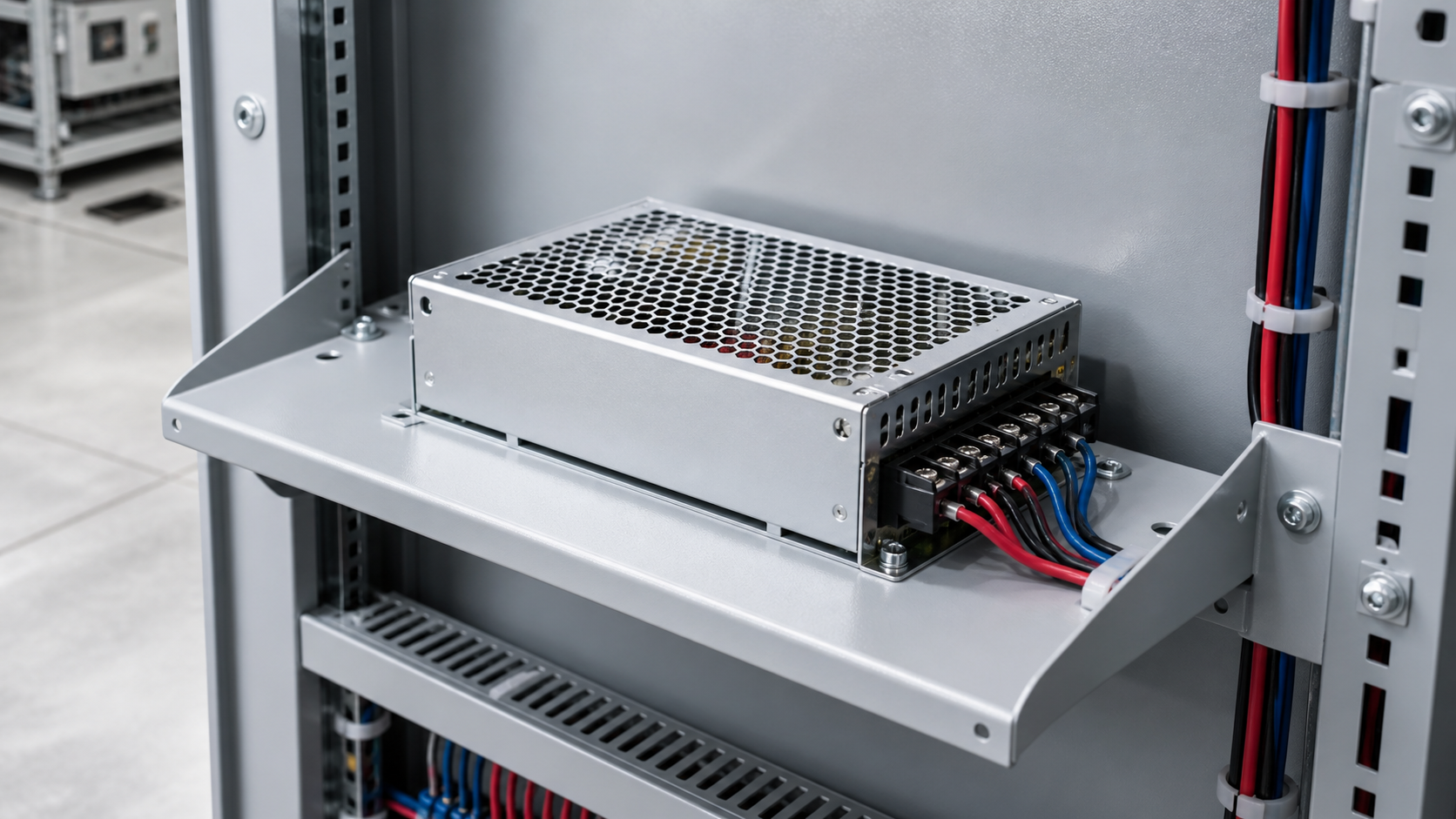
A battery tray is both a structural support and a service instruction made from metal. It must hold the pack through transport and vibration, keep terminals and vents clear, and still let a technician remove the battery without lifting against a cable or damaging the case. A strap that looks secure on a bench can loosen when the center of mass moves, while a rigid corner can create a local load on a plastic battery body.
Working answer: Freeze the pack envelope, center of mass, restraint direction, terminal clearance, vent path, removal lift and inspection evidence. Then use the actual battery family and hardware in a loaded trial before treating the tray as released.
| Check | Confirm | Risk if missed |
|---|---|---|
| Mass | Pack weight and center | Tray distortion |
| Restraint | Retention direction and padding | Pack movement |
| Terminal | Cable and tool clearance | Short or strain |
| Vent | Gas and heat path | Unsafe pressure |
| Service | Lift, label and spare | Damaged pack |
The IEC 62208 publication provides enclosure-level context, but it does not qualify this custom secure battery service interface or replace component instructions and project-specific verification.
Model the Pack, Not a Box
Use the approved battery dimensions, mass, center of gravity, case ribs, terminals, handles and vent features. Mark the datum from the tray and show the pack in its seated, retained and lifted positions. In electrical enclosure battery tray restraint design, the restraint should contact a permitted surface and avoid pressing on a vent, label or flexible case wall. Keep a family matrix if more than one battery is offered.
Choose a Restraint Direction
Compare a strap, crossbar, end bracket, captive clamp and guided drawer by vibration direction, temperature, aging, cleaning and replacement. Padding can spread a load but may absorb fluid or creep under heat. A hard stop can locate the pack yet concentrate force at a corner. State the preload, travel limit and removal direction so a supplier cannot substitute a visually similar restraint with a different load path.
Leave Terminal and Vent Space
Route the cable, fuse, disconnect, vent and service tool around the retained pack. Check the largest connector, bend radius and hand position with the restraint closed. Keep a tie or bracket from becoming a heat bridge or chafing point. The related Jewein battery mounting note at this page can inform the surrounding layout, while the tray requires its own clearance and retention evidence.
Design for a Real Lift
Write how the pack is isolated, released, supported and lifted. If the technician must tilt it, show the sweep and the cable slack. A tray that requires a second person or a hidden pry point should say so rather than pretending to be tool-free. Rehearse the removal with the enclosure installed, the normal gloves and the actual spare pack. Record contact marks, dropped hardware, label visibility and the point where specialist electrical handling begins.
Screen Transport and Vibration
Secure the loaded tray to a representative panel, include the cable mass and neighboring hardware, and apply the movement expected before final installation. Inspect strap migration, fastener witness marks, foam set, tray deflection and terminal strain. Repeat after a service removal and reinstallation. This is a configuration record, not a universal battery qualification; it identifies what would force a new pilot.
Inspect the Hidden Contact
Use a marked contact map to show where the restraint touches, where clearance remains and where a vent or terminal must never be covered. Check torque, padding thickness, tray flatness, pack identity and label orientation. Photograph the installed and released states. Keep the battery revision, restraint revision and work instruction together so a later chemistry or supplier change is visible.
Quote the Complete Restraint
Provide battery CAD and schedule, tray section, restraint hardware, padding, terminal and vent map, service sequence, vibration screen, inspection gauges, packaging and spare identity. Ask bidders to mark any adhesive, field drilling or alternate pack assumption. Jewein can review the release packet at https://www.jewein.com/contact-us once qualified electrical and safety owners have confirmed their boundaries.
Secure battery service Approval Notes
At the design review, translate secure battery service into a physical setup that a supplier and an inspector can both understand. Use the mass requirement as the first datum, then mark the restraint interface, the terminal clearance and the vent limit on the same view. The electrical enclosure battery tray restraint design record should state what is fixed, what may adjust and what condition forces another review.
For the first article, assemble the battery tray, restraint, pack, terminal, vent and service tool with production-like material, finish, mating parts and normal tools. Check the released secure battery service state before adding a difficult tolerance or a substitute component. Measure the terminal feature most likely to drift in the secure battery service assembly, photograph the operator side and record the part revisions. A clean sample is useful only when the electrical enclosure battery tray restraint design acceptance notes explain how the same result will be repeated on the line.
Procurement should ask for assumptions in a marked-up drawing instead of accepting a broad statement that the battery tray, restraint, pack, terminal, vent and service tool will fit. Request the mass load or duty boundary, installation order, inspection method, spare identity and change triggers. The related Jewein planning note can frame the neighboring interface, while the topic guide keeps the electrical enclosure battery tray restraint design decision tied to the correct enclosure revision.
The secure battery service service walkthrough should include the least convenient approved variant, the actual access direction and the tool that a technician will carry. Observe where a hand, cable, label or fastener changes the secure battery service sequence, and record any step that depends on a second person or specialist approval. Repeat the check after removal and reinstallation so the electrical enclosure battery tray restraint design design is judged as a working service feature rather than a one-time assembly success.
When a device, panel, coating, hardware family or environment changes, compare the new condition with the released secure battery service boundary. Review the mass datum, restraint response, terminal clearance and vent behavior before deciding that an old sample still applies. This change-control habit keeps the electrical enclosure battery tray restraint design file useful across variants without pretending that similar geometry is automatically equivalent.
At handover for the battery tray, restraint, pack, terminal, vent and service tool, keep the drawing, variant matrix, work instruction, inspection aid, sample photographs, test or screening record and spare rule together. Note the exact orientation, torque or setting, cleaning limit and permitted rework for the battery tray, restraint, pack, terminal, vent and service tool. The final electrical enclosure battery tray restraint design package should make a field decision traceable to Jewein's released interface while leaving final electrical, thermal, mechanical and compliance judgments with the qualified project owners.
Questions Buyers Ask About secure battery service
What should be frozen before a supplier quotes? — secure battery service
For secure battery service, freeze the functional geometry, controlling datum, duty, service action and replacement boundary before pricing. The battery tray, restraint, pack, terminal, vent and service tool boundary should be visible on the drawing.
When is a similar part an acceptable substitute? — secure battery service
A battery tray, restraint, pack, terminal, vent and service tool substitute is acceptable only after accept it only when dimensions, materials, loads, clearances, service behavior and evidence match the released record. Keep the approved secure battery service state as the comparison point.
What belongs in the first production sample? — secure battery service
The secure battery service sample should use production hardware, finish and tools, then follow the complete service sequence.
How can a hidden failure be exposed? — secure battery service
Expose a hidden secure battery service defect with a datum, functional check, witness mark and photograph tied to the failure mode.
What usually creates field rework? — secure battery service
Field trouble with the battery tray, restraint, pack, terminal, vent and service tool often follows late changes, coating effects, poor access or an untested service action.
What should the RFQ request? — secure battery service
An RFQ for secure battery service needs the released CAD, material, duty, environment, access, sample plan, inspection and spare rule.
When should the pilot be repeated? — secure battery service
Repeat the secure battery service pilot when the panel, hardware, component family, coating, route, environment or service routine changes.
How should the spare be named? — secure battery service
Identify a battery tray, restraint, pack, terminal, vent and service tool spare by enclosure revision, functional location, mating parts, installation method and replacement limit.
What should handover records contain? — secure battery service
Handover for secure battery service should show the drawing, variant matrix, work instruction, inspection method, images, result and change triggers.
Who owns final safety decisions? — secure battery service
Final safety ownership for battery tray, restraint, pack, terminal, vent and service tool stays with qualified specialists; this guide keeps the engineering and purchasing boundary clear.
Jewein Release Note: secure battery service
A sound electrical enclosure battery tray restraint design package lets a buyer compare suppliers around the mass datum, the restraint response and the secure battery service service boundary. It records the terminal evidence and the change trigger that would reopen the review. Jewein can review this battery tray, restraint, pack, terminal, vent and service tool interface through the contact team, while qualified specialists retain final electrical, thermal, mechanical and compliance decisions for the installed system.