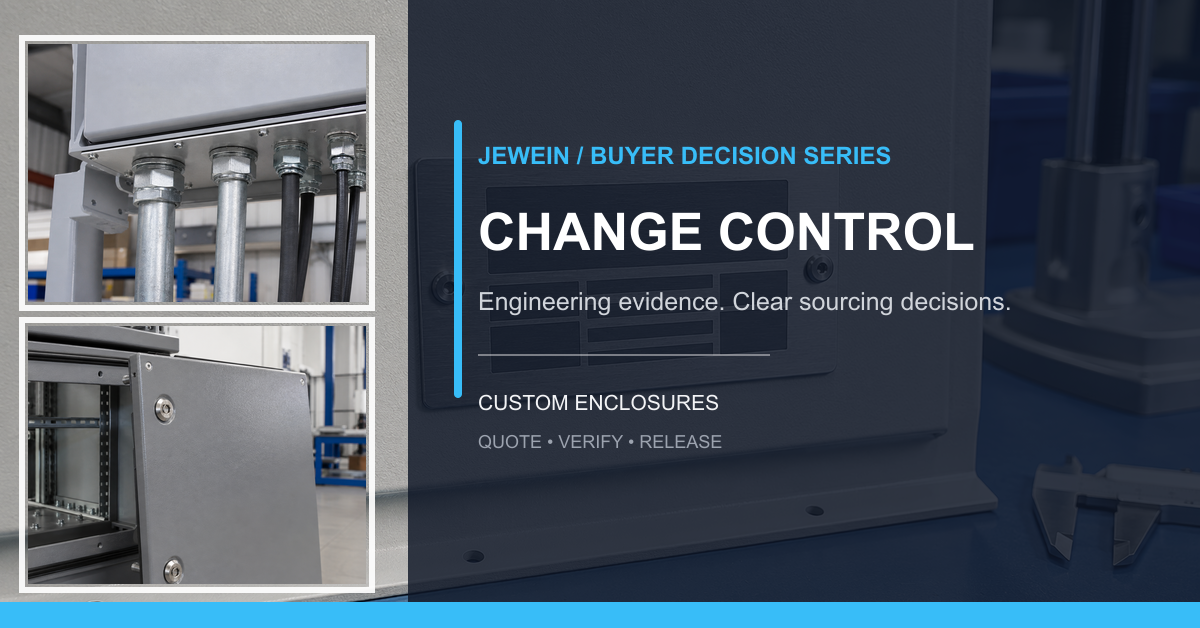



A flat pattern can be dimensionally perfect and still produce a formed part that does not fit. Material thickness varies, springback changes, the bend sequence moves features, and coating tightens the final assembly.
Useful sheet metal bending tolerances begin with the formed part and its mating components, not with the flat drawing alone.
Material behavior changes the bend result
Alloy, temper, thickness, grain direction, and material lot can influence springback and bend radius. A supplier may compensate through tooling and bend data, but the drawing should avoid assuming that every sheet behaves identically.
Identify bends that control enclosure gaps, hole relationships, or mounting interfaces. These deserve more attention than a hidden flange with generous clearance.
Bend sequence affects feature relationships
A hole may move relative to another face after several bends. A flange may block tool access for the next operation. Dense features near bend lines may distort.
Sharing the final assembly allows the supplier to review sequence and datums around actual function. It also helps buyers understand whether a tolerance belongs before or after forming.
Inspect the finished condition
Critical features should be checked after all relevant bends and finishing steps. If coating, inserts, welding, or hardware affects fit, include those processes in sample approval.
Assembly clearance can be more valuable than a tighter bend
Teams sometimes tighten bend tolerances because the first assembly felt difficult. The true problem may be the tolerance stack between several panels, coating thickness, hardware position, or an unclear datum.
Before changing the drawing, identify which relationship is creating interference. Tightening every bend increases inspection and rejection risk without necessarily improving the assembly. In many projects, a controlled locating feature and practical clearance provide a more stable result.
Compare supplier measurement methods
Large or flexible sheet metal parts can measure differently depending on support, fixture, temperature, and the point from which the angle is checked. Two suppliers may report different results while using different reasonable methods.
For critical bends, the drawing or inspection note should show the datum, support condition, and relevant formed relationship. This gives repeat orders and supplier transfers a common reference.
Use assembly evidence before tightening the drawing
If a formed part fits poorly, photograph the interference, record the mating dimensions, and identify whether bending, coating, hardware, or another component created the problem. This is more useful than immediately adding tighter limits to every angle.
Practical sheet metal bending tolerances should remove repeated assembly work while remaining achievable with the selected material, tooling, sequence, and inspection method.
Jewein can review drawings, bend relationships, assembly risks, sample results, and inspection methods. Buyers can contact Jewein with the finished-part drawing and the features that currently cause fit problems.
When possible, approve a physical formed sample that can remain available as a reference for later inspection and supplier transfer.
The final inspection method should remain consistent across repeat orders.
What affects sheet metal bending accuracy?
Material, thickness, grain, tooling, bend radius, springback, sequence, clamping, and measurement method.
Should every bend have a tight tolerance?
No. Tight control should focus on bends and relationships that affect function or customer acceptance.
Why do holes move after bending?
Material deformation, bend allowance, springback, and the relationship between the hole and bend line can change the final position.
Coating and hardware should be included in tolerance review
A bend may pass before finishing and create interference after coating, inserts, hinges, or gaskets are installed. Critical clearances should be evaluated in the delivered condition.
This is especially important for doors, mating flanges, narrow slots, and parts that rely on several formed pieces aligning together.