


A mounting foot slot is useful only when its direction, edge distance and load path match the base that will receive it. A long slot cut in the wrong direction can make the cabinet move under a side load, while a short slot can turn a normal anchor tolerance into field drilling. Buyers should separate leveling, positioning and anchoring, then show how the foot, washer, coating and base interact during installation.
Working answer: Choose the slot direction from the site adjustment, carry the anchor load through a defined washer and foot, and verify the installed cabinet at its permitted level and torque. That makes sheet metal enclosure mounting foot slot design a field-controlled interface rather than a convenient oval hole.
| Check | Confirm | Risk if missed |
|---|---|---|
| Adjustment | Slot direction and travel | No fit at site |
| Load | Anchor, washer and foot path | Foot tear-out |
| Base | Flatness, grout and edge | Rocking cabinet |
| Finish | Coating and bare contact | Loose torque |
| Install | Tool, sequence and access | Forced drilling |
The IEC 62208 publication provides enclosure-level context, but it does not qualify this custom site-ready anchoring interface or replace component instructions and project-specific verification.
Separate Three Jobs
Mark which geometry positions the enclosure, which allows leveling and which carries the anchor load. A single slot often gets asked to do all three and ends up too long to control movement or too short to accommodate the base. In sheet metal enclosure mounting foot slot design, each function needs a datum and an acceptance note. Show the finished foot in plan and section, with the washer, fastener, base plate and any grout or isolator that changes the load path.
Point the Slot at the Tolerance
Use the survey or installation tolerance that actually drives the adjustment: center-to-center anchor error, cabinet depth, side clearance or a sloped base. Orient the slot so the permitted movement does not open a weak edge toward the expected load. Add end radii, edge distance and a minimum washer overlap. The installer should be able to see the useful travel without translating a generic slot length into a site decision.
Carry Load Through the Foot
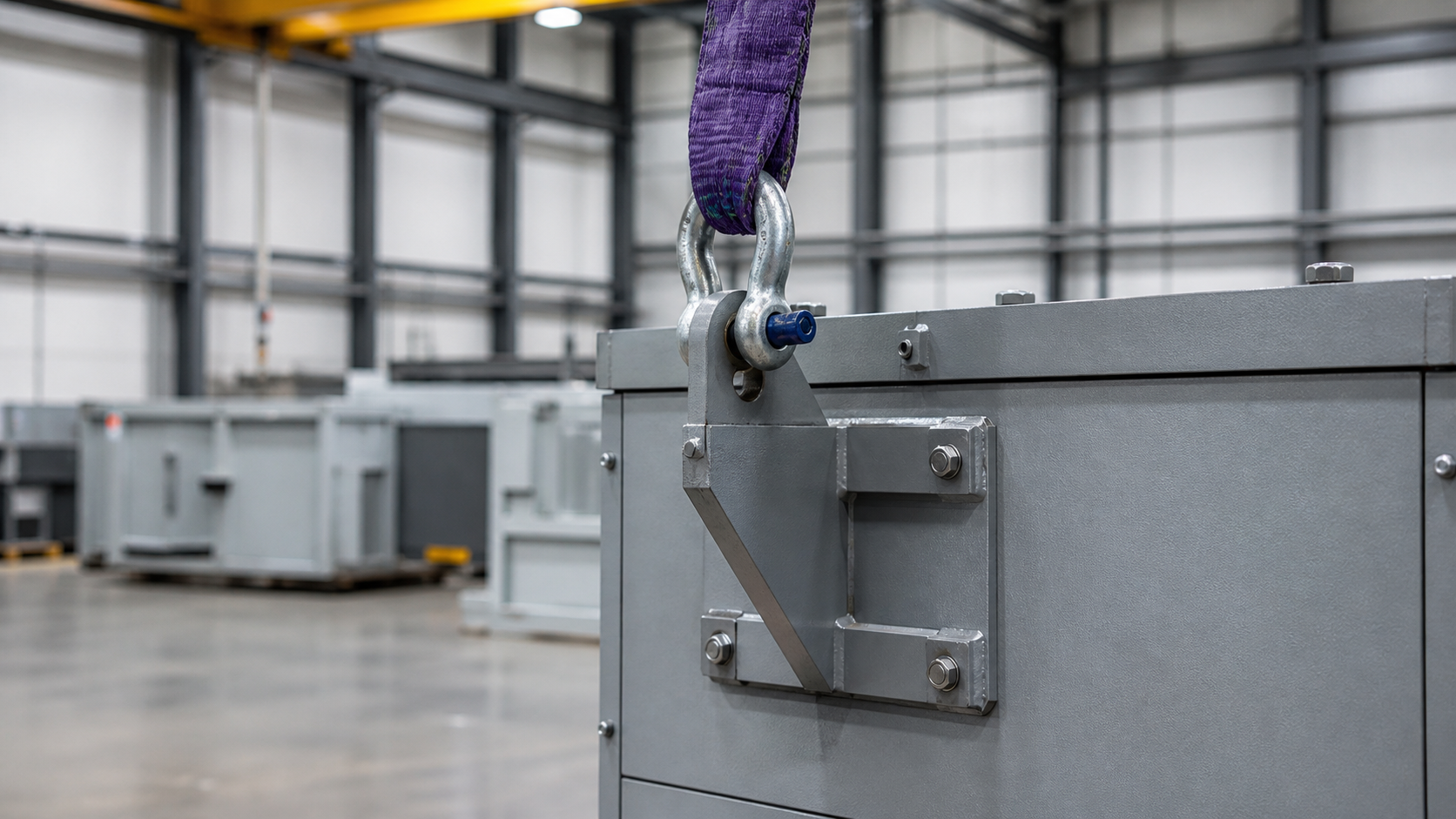
Compare a folded foot, welded angle, separate shoe and reinforced slot by the vertical, lateral and uplift forces expected after installation. Check local bending around the slot, not only the anchor tensile rating. Include a hard washer or backing plate if the sheet would dish under torque. The related Jewein lifting-bracket article at this page offers a neighboring load-path reminder; the mounting foot remains a separate release.
Respect the Base Condition
Concrete, channel steel, painted skid and vibration isolator present different contact surfaces. State the flatness, shim allowance, drainage path and minimum edge distance for the base. Prevent a slot from becoming a water pocket under an outdoor cabinet. If leveling feet or grout are allowed, show the sequence before final anchor torque. A foot that sits square on a clean bench may rock once a cable load and a shim pack are added.
Protect Finish and Grounding
Coating at a clamped joint can change thickness and friction; a deliberate bonding surface may need a different treatment. Define whether the washer bears on coated metal, a masked pad or a separate grounding part, and who owns the electrical continuity decision. Protect slot edges from burrs and corrosion after cutting. The drawing should identify touch-up limits and the evidence required after the foot is tightened.
Run an Installation Trial
Use the production foot, fastener, washer, base coupon, finish and a realistic cabinet load. Set the cabinet at the most offset permitted position, level it, torque the anchors and apply the specified side or cable force. Recheck movement, foot deformation, washer overlap and door alignment. Record the tools and sequence so another supplier cannot pass by using a different, more forgiving fixture.
Make the Site Boundary Quotable
Include anchor map, slot direction, travel, section, material, reinforcement, finish, washer, base assumptions, installation tools, torque method, inspection points and spare foot identity. Ask bidders to list any drilling or welding proposed in the field. Jewein can review the marked-up site interface through https://www.jewein.com/contact-us when the base and load assumptions are available.
Site-ready anchoring Approval Notes
At the design review, translate site-ready anchoring into a physical setup that a supplier and an inspector can both understand. Use the adjustment requirement as the first datum, then mark the load interface, the base clearance and the finish limit on the same view. The sheet metal enclosure mounting foot slot design record should state what is fixed, what may adjust and what condition forces another review.
For the first article, assemble the mounting foot, slot, anchor, base, washer and enclosure with production-like material, finish, mating parts and normal tools. Check the released site-ready anchoring state before adding a difficult tolerance or a substitute component. Measure the base feature most likely to drift in the site-ready anchoring assembly, photograph the operator side and record the part revisions. A clean sample is useful only when the sheet metal enclosure mounting foot slot design acceptance notes explain how the same result will be repeated on the line.
Procurement should ask for assumptions in a marked-up drawing instead of accepting a broad statement that the mounting foot, slot, anchor, base, washer and enclosure will fit. Request the adjustment load or duty boundary, installation order, inspection method, spare identity and change triggers. The related Jewein planning note can frame the neighboring interface, while the topic guide keeps the sheet metal enclosure mounting foot slot design decision tied to the correct enclosure revision.
The site-ready anchoring service walkthrough should include the least convenient approved variant, the actual access direction and the tool that a technician will carry. Observe where a hand, cable, label or fastener changes the site-ready anchoring sequence, and record any step that depends on a second person or specialist approval. Repeat the check after removal and reinstallation so the sheet metal enclosure mounting foot slot design design is judged as a working service feature rather than a one-time assembly success.
When a device, panel, coating, hardware family or environment changes, compare the new condition with the released site-ready anchoring boundary. Review the adjustment datum, load response, base clearance and finish behavior before deciding that an old sample still applies. This change-control habit keeps the sheet metal enclosure mounting foot slot design file useful across variants without pretending that similar geometry is automatically equivalent.
At handover for the mounting foot, slot, anchor, base, washer and enclosure, keep the drawing, variant matrix, work instruction, inspection aid, sample photographs, test or screening record and spare rule together. Note the exact orientation, torque or setting, cleaning limit and permitted rework for the mounting foot, slot, anchor, base, washer and enclosure. The final sheet metal enclosure mounting foot slot design package should make a field decision traceable to Jewein's released interface while leaving final electrical, thermal, mechanical and compliance judgments with the qualified project owners.
Questions Buyers Ask About site-ready anchoring
What should be frozen before a supplier quotes? — site-ready anchoring
For site-ready anchoring, freeze the functional geometry, controlling datum, duty, service action and replacement boundary before pricing. The mounting foot, slot, anchor, base, washer and enclosure boundary should be visible on the drawing.
When is a similar part an acceptable substitute? — site-ready anchoring
A mounting foot, slot, anchor, base, washer and enclosure substitute is acceptable only after accept it only when dimensions, materials, loads, clearances, service behavior and evidence match the released record. Keep the approved site-ready anchoring state as the comparison point.
What belongs in the first production sample? — site-ready anchoring
The site-ready anchoring sample should use production hardware, finish and tools, then follow the complete service sequence.
How can a hidden failure be exposed? — site-ready anchoring
Expose a hidden site-ready anchoring defect with a datum, functional check, witness mark and photograph tied to the failure mode.
What usually creates field rework? — site-ready anchoring
Field trouble with the mounting foot, slot, anchor, base, washer and enclosure often follows late changes, coating effects, poor access or an untested service action.
What should the RFQ request? — site-ready anchoring
An RFQ for site-ready anchoring needs the released CAD, material, duty, environment, access, sample plan, inspection and spare rule.
When should the pilot be repeated? — site-ready anchoring
Repeat the site-ready anchoring pilot when the panel, hardware, component family, coating, route, environment or service routine changes.
How should the spare be named? — site-ready anchoring
Identify a mounting foot, slot, anchor, base, washer and enclosure spare by enclosure revision, functional location, mating parts, installation method and replacement limit.
What should handover records contain? — site-ready anchoring
Handover for site-ready anchoring should show the drawing, variant matrix, work instruction, inspection method, images, result and change triggers.
Who owns final safety decisions? — site-ready anchoring
Final safety ownership for mounting foot, slot, anchor, base, washer and enclosure stays with qualified specialists; this guide keeps the engineering and purchasing boundary clear.
Jewein Release Note: site-ready anchoring
A sound sheet metal enclosure mounting foot slot design package lets a buyer compare suppliers around the adjustment datum, the load response and the site-ready anchoring service boundary. It records the base evidence and the change trigger that would reopen the review. Jewein can review this mounting foot, slot, anchor, base, washer and enclosure interface through the contact team, while qualified specialists retain final electrical, thermal, mechanical and compliance decisions for the installed system.