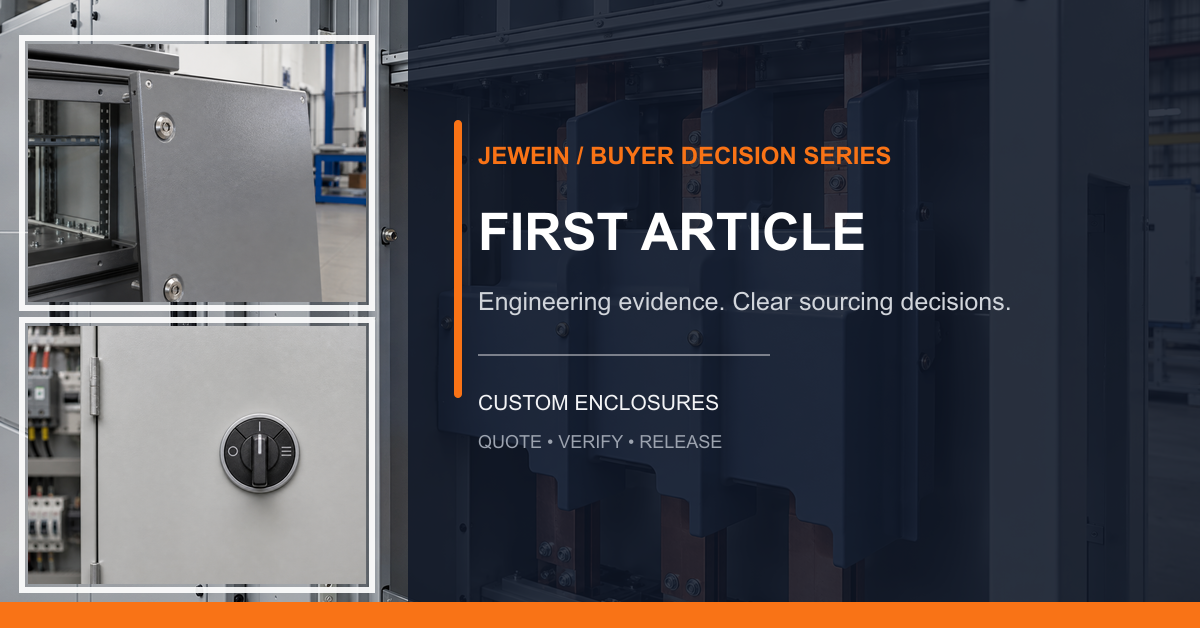



A supplier brochure can show an impressive row of lasers, press brakes, weld bays, coating equipment, and inspection tools. The brochure cannot show what happens when the drawing conflicts with the assembly, the sample fails, or a revision reaches the shop late.
A useful sheet metal manufacturing partner brings judgment and accountability to the equipment instead of leaving the buyer to coordinate every uncertainty.
Listen to the questions before comparing the answers
Questions about mating parts, customer-facing surfaces, hardware, finish, and cartons show that the supplier is thinking beyond a flat drawing.
The buyer should also expect assumptions to be visible in the quotation. Material, tolerances, inspection, fixtures, finish, and packing need enough detail for fair comparison.
Samples reveal working habits
Pay attention to revision control, schedule updates, problem reporting, inspection evidence, and how supplier changes reach production. A good sample with weak documentation may be difficult to repeat.
Ask what will change between the sample and the normal batch. Extra handwork and special attention should not remain hidden.
The project is not finished when the carton closes
Labels, separators, supported cartons, hardware bags, and shipment photos decide whether correct parts reach the line ready for work.
Review how the supplier responds when something goes wrong
Sooner or later, material arrives late, a finish fails, a feature is wrong, or freight damages a part. What matters next is whether the supplier spots it, explains it plainly, protects the current order, and changes something specific before the next one.
During a trial order, observe whether the supplier provides evidence, distinguishes root cause from symptoms, and updates the production file. Vague promises to “pay more attention” are less valuable than a specific process, drawing, inspection, or packaging change.
A long-term partner should improve the project record
Each order should leave the project clearer. Supplier questions should improve drawings, sample feedback should improve inspection, and delivery experience should improve packaging and labels.
This accumulated knowledge is part of the value of a manufacturing relationship. It reduces the effort required for repeat orders and helps new team members understand why the accepted product is made the way it is.
The supplier relationship should make future projects easier to start
A useful partner retains approved finishes, packaging methods, hardware references, inspection logic, and lessons from previous assemblies. New quotations can then begin from shared manufacturing knowledge instead of repeating basic misunderstandings.
When selecting a sheet metal manufacturing partner, buyers should consider whether the supplier's project records and communication will continue creating value after the first successful shipment.
Jewein combines customized industrial manufacturing with engineering review, production optimization, and supply-chain coordination. Buyers looking for a sheet metal manufacturing partner can contact Jewein with drawings, target quantities, and current supplier concerns.
Buyers should leave the trial with a clearer drawing, quality plan, packaging method, and responsibility map than they had before the order.
What should buyers compare between sheet metal suppliers?
Compare process scope, engineering review, assumptions, sample method, inspection, communication, packaging, capacity, and repeat controls.
Is the lowest quotation usually the best choice?
Not necessarily. A low price may exclude work that later appears as rework, assembly labor, quality disputes, or packaging damage.
How can buyers test a new supplier?
Use a controlled trial order with clear success criteria, production-relevant inspection, packaging, and a documented review.
Commercial transparency protects the partnership
Material increases, fixture investment, special inspections, and expedited schedules can change price. A partner should explain the cause and scope rather than hiding costs in a revised unit number.
Clear commercial assumptions make supplier comparisons fairer and reduce conflict when a design or quantity changes after the first quotation.