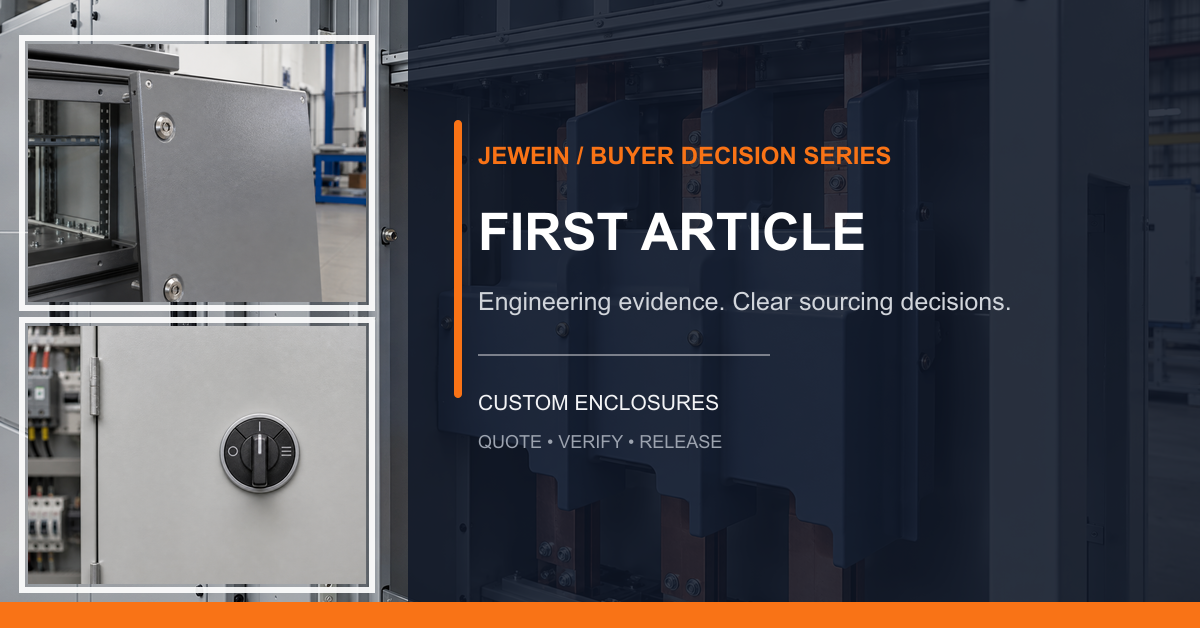



A buyer may need 50 enclosures today, another 80 after customer approval, and a revised version three months later. A production route optimized only for the lowest unit cost may create too much tooling, inventory, and change risk.
Low-volume sheet metal fabrication is valuable when flexibility, learning, and supply responsiveness matter more than maximum production speed.
Low volume is a different production problem
Small batches often use programmable cutting, standard bending tools, modular fixtures, and more flexible work instructions. This reduces dedicated investment but may increase setup and manual handling per part.
Buyers should understand which work repeats every order and which work can be retained. Saved programs, approved bend data, fixture references, finish samples, and packaging records can improve later batches.
Design changes need a controlled path
Flexibility does not mean uncontrolled revision. The supplier still needs one released drawing, clear effective dates, and separation of old and new stock.
When design changes are likely, avoid purchasing excess finished inventory only to obtain a lower unit price. The cost of obsolete parts may exceed the saving.
Use the first batches to improve production economics
Operator feedback, setup time, rework, finish losses, and packaging performance should be reviewed after early orders. Some fixtures or design changes may become worthwhile once repeat demand is visible.
Supplier planning matters more when batches are irregular
Low-volume demand is often uneven. The buyer may order several batches close together and then pause for months. Material availability, setup time, stored programs, finish batches, and subcontractor minimums can therefore affect price and lead time from one order to the next.
A useful supplier plan identifies what can be preserved between batches and what must be repeated. Buyers should also clarify whether material can be reserved, whether finish references remain available, and how quickly production can restart after a long gap.
Quality should not depend on one experienced technician
Flexible production often includes more manual work. That can be effective, but accepted results need photographs, work instructions, inspection points, and sample references so the process does not depend entirely on memory.
The best low-volume route combines flexibility with enough documentation to keep later batches recognizable and usable.
The first repeat order should test whether flexibility remains controlled
Low-volume suppliers are often praised for fast changes, but every change still needs a released revision, updated quotation, and clear effect on old stock. Flexibility without control can create mixed parts and uncertain acceptance.
A strong low-volume sheet metal fabrication partner keeps the route adaptable while preserving the approved material, finish, hardware, inspection, and packing references between irregular orders.
Jewein supports custom industrial projects from prototypes through repeat orders. Buyers can contact Jewein with drawings, forecast ranges, and expected revision timing to plan a suitable low-volume route.
The order record should also show whether leftover material or finished stock is held for the next scheduled release.
What quantity is considered low volume?
There is no universal number. It depends on part size, process, setup, tooling, demand stability, and supplier capability.
Is low-volume fabrication suitable for production parts?
Yes, especially for specialized equipment, changing designs, service parts, or uncertain demand.
Can low volume later scale?
Yes. Early records should be designed so proven decisions can transfer into fixtures, tooling, and higher-volume controls.
Pricing should show the effect of batch size
Setup, material purchases, finish minimums, and inspection time can make 20 pieces and 100 pieces follow different economics. Ask for more than one realistic quantity when demand is uncertain.
This allows the buyer to see where price improves and whether the supplier expects process, fixture, or packaging changes at a higher release.