


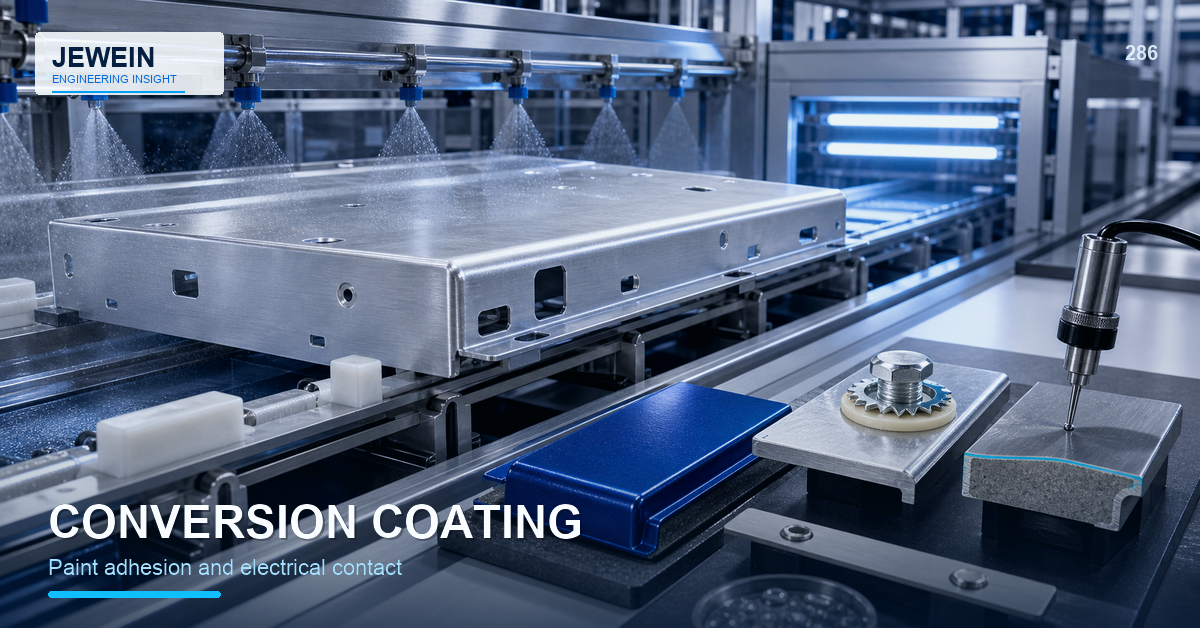
An aluminum conversion layer may support corrosion protection, paint adhesion, or electrical contact, but those goals do not always point to the same process choice. Alloy, cleaning, oxide condition, chemistry, film type, rinsing, handling, and later coating all affect the result.
Control aluminum conversion coating by dividing the part into functional zones. Decide which surfaces will be painted, bonded, grounded, sealed, left visible, or protected from treatment, then build one compatible process route.
Identify Alloy and Incoming Condition
Record alloy, temper, cladding, previous finish, cutting fluids, oxide, corrosion, heat tint, markings, adhesives, and protective film residue. Different aluminum conditions can respond differently to the same pretreatment.
The anodized aluminum parts guide is useful for understanding why alloy and prior surface history matter even when the selected finish is different.
Divide the Part Into Functional Zones
Use the drawing or a color-coded model to mark:
| Zone | Required function | Typical review |
|---|---|---|
| Paint area | Adhesion and corrosion support | Pretreatment continuity and paint compatibility |
| Electrical contact | Controlled resistance | Film type, pressure, hardware, cleanliness |
| Adhesive bond | Surface compatibility | Chemistry, age, handling, bond qualification |
| Sealing land | Surface condition and gasket fit | Residue, roughness, dimensional stack |
| Cosmetic bare area | Appearance and uniformity | Color, stains, handling marks |
| Masked feature | No treatment or later process need | Mask edge, leakage, removal |
This prevents a general finish note from hiding conflicting requirements.
Build the Cleaning Route Around Real Contamination
Oil, oxide, shop dirt, tape adhesive, marker ink, and embedded particles do not respond to one universal cleaner. Establish the cleaning and etch route with qualified finishing personnel and representative production soil.
Water-break behavior or visual cleanliness may provide useful process evidence, but acceptance should follow the governing requirement. Avoid touching prepared surfaces or allowing long uncontrolled delays before treatment.
Protect Electrical Contact Without Guessing
Some specified conversion systems are selected where electrical continuity is needed. Actual contact resistance still depends on coating type, surface condition, thickness, hardware, serration, clamp pressure, joint area, and service corrosion.
For this conversion treatment, validate the complete contact stack. The sheet metal grounding and bonding guide explains why bare-metal intent, fastener pressure, masking, and verification must be coordinated.
Confirm Paint-System Compatibility
The conversion layer is one part of the paint or powder-coat system. Cleaning, rinsing, dry-off, delay, contamination, film condition, primer or powder, cure, and handling all influence adhesion.
Do not approve the pretreatment and topcoat independently. Use representative panels or parts processed through the complete route. The powder coating adhesion guide provides a failure-tree approach for separating pretreatment and cure issues.
Map Rinse and Drain Paths
Hems, blind holes, tubes, overlapping joints, captive hardware, and deep enclosures can retain chemistry or rinse water. Trapped solution may stain, attack the surface, contaminate paint, or leak out during cure.
Review rack orientation, immersion, spray access, drain holes, flushing, and drying. Treat solution entrapment as a design issue when geometry prevents reliable processing.
Define Masking and Process Order
Masking may protect contacts, threads, adhesive zones, labels, or mating surfaces. It can also leave residue, create a sharp transition, leak, or lift during processing.
Sequence matters. Hardware installed too early can trap chemistry; machining after treatment exposes bare aluminum; welding or grinding can destroy the local surface. Put the finish route beside the fabrication and assembly sequence.
Inspect Function, Not Only Color
Visual appearance can reveal stains, powdery residue, incomplete coverage, water marks, or handling damage, but color alone does not establish corrosion protection, adhesion, or electrical behavior.
Use process records and specified verification suited to the function. This may include coverage review, adhesion evidence, contact-resistance testing, corrosion testing, cleanliness checks, or representative assembly trials.
Control Delay and Supplier Changes
Prepared aluminum can change while it waits between cleaning, treatment, and painting. Define maximum delays, storage conditions, and the action after an interruption. Parts should not sit unprotected near grinding, welding, silicone, or dirty packaging operations.
Review changes in alloy source, cleaner, chemistry, rinse quality, rack material, dry-off, paint supplier, or line speed before routine production. A matched sample processed through the old and new routes can reveal changes that visual inspection alone misses.
Release a Zone-Based Finish Plan
The drawing and supplier package should identify alloy, functional zones, finish requirement, masking, process order, critical contact or bond areas, inspection, approved substitutions, repair method, and packaging. Keep the governing revision visible at every step.
Jewein describes drawing and manufacturing-risk review in its company overview. Final chemical, environmental, electrical, and safety requirements need qualified specialists and applicable specifications.
For a focused aluminum conversion coating review, contact Jewein with the alloy, part geometry, paint system, electrical contacts, adhesive zones, masks, service environment, inspection method, and current failure evidence.
Frequently Asked Questions
Why apply a conversion layer to aluminum?
Depending on the specified system, it may support corrosion protection, paint adhesion, or an electrically functional contact surface.
Is it the same as anodizing?
No. The processes create different films with different thickness, appearance, electrical, dimensional, and performance characteristics.
Can treated aluminum still conduct electricity?
Some systems are used for conductive contact, but joint resistance depends on film, cleanliness, hardware, area, and contact pressure.
Why do treated parts show stains?
Incoming contamination, chemistry control, poor rinsing, trapped solution, drying, handling, or alloy response can contribute to staining.
What should be verified before painting?
Confirm material identity, cleaning, complete and acceptable treatment, rinse and dry condition, timing, handling, paint compatibility, and adhesion evidence.