


Outdoor protection begins before water reaches a gasket. Roof slope, overhangs, drip edges, door orientation, louvers, cable routes, and mounting surfaces decide where rain collects and how long it stays. A flat-topped enclosure may pass a short spray and still hold water against a seam after the test ends.
Plan outdoor sheet metal enclosure rain protection from the top down: roof runoff, wall paths, openings, wind direction, splash, drainage, materials, service access, and installation variation. Good shedding geometry reduces the load on every downstream seal.
Start at the Roof
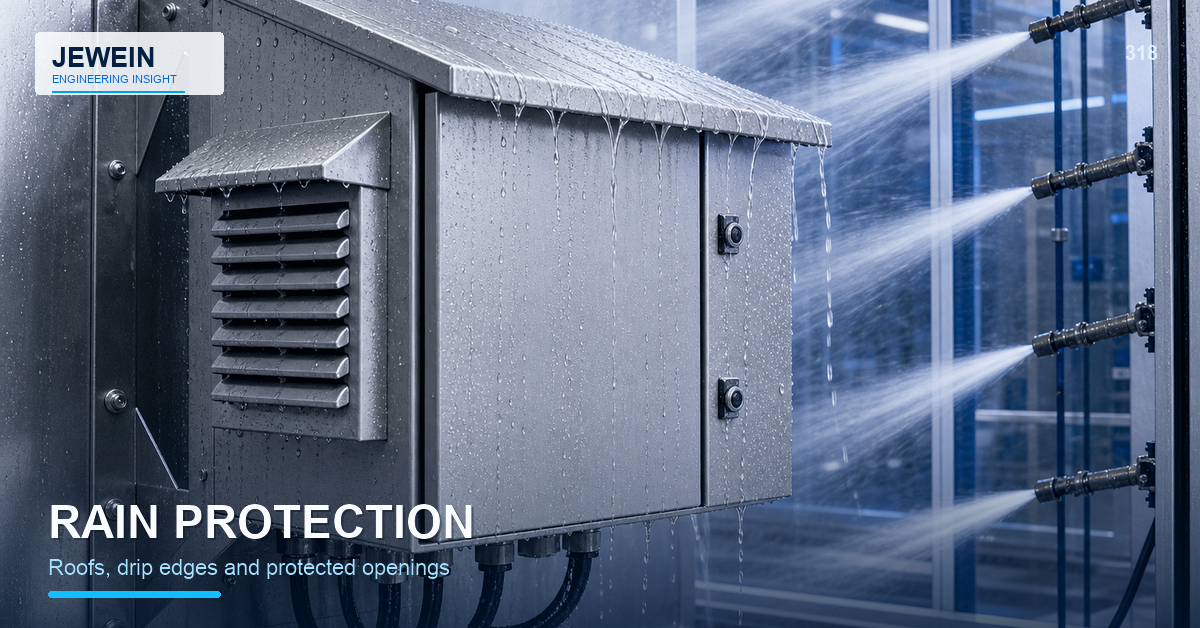
Use slope, overhang, raised seams, covers, or another suitable geometry to reduce standing water. Review fasteners, lifting points, antennas, and penetrations that interrupt the roof.
Standing water increases exposure time and finds small discontinuities. Verify the installed level and structural deflection rather than assuming the roof remains perfectly pitched.
Create Clean Drip Edges
Water follows surface tension around a simple folded edge. A defined drip break encourages it to detach before reaching the wall, door, or underside seam.
For outdoor sheet metal enclosure rain protection, inspect the full edge after coating. Heavy film, sealant, damage, or a tight wall gap can bridge the intended break.
| Rain path | Design response | Verification |
|---|---|---|
| Roof runoff | Slope, overhang, drip break | Continuous water observation |
| Door top | Gutter or shield | Open-door and closed-door exposure |
| Louver face | Blade overlap and baffle | Wind-angle spray test |
| Cable entry | Drip loop and downward approach | Installed cable exposure |
| Base and wall | Clearance and drainage | Mounted-configuration inspection |
Protect the Door Opening
Water on the door face can enter when the door opens, even if the closed seal performs well. Add gutters, channels, shields, or a protected hinge orientation where service exposure matters.
The sheet metal door alignment guide helps connect frame geometry, hinge axis, latch load, gasket compression, panel flatness, and installation support.
Manage Louvers and Vents
Orient openings away from direct exposure where possible. Use blade overlap, screens, baffles, or hoods while maintaining airflow and drainage.
The sheet metal enclosure louver guide explains free area, rain angle, formed stiffness, finish, cleaning, and test conditions. The enclosure pressure vent guide covers membrane mounting and breathing behavior.
Route Cables Down Before Entry
Use drip loops and protected entry locations so water does not track along the cable toward the seal. Maintain bend radius and strain relief.
The sheet metal enclosure cable entry sealing guide connects cable range, gland fit, plate stiffness, grounding, drainage, and service.
Control Wind-Driven Rain and Splash
Wind can push water upward and sideways through paths that resist vertical rain. Vehicles, roof runoff, nearby equipment, and ground splash create local exposure.
Review likely wind directions and mounting height. A wall may shelter one side while concentrating runoff on another.
Drain Captured Water Safely
Baffles, gutters, and shields only move water. Provide continuous channels and installed low points so captured water leaves without crossing cables or electronics.
The sheet metal enclosure drain hole guide covers slope, size, blockage, screens, corrosion, internal hardware, and cleaning.
Select Materials and Finish for Wet Zones
The wettest evidence is often at an unremarkable detail: a scratched bottom fold, a fastener washer, or the back of a drain lip. Photograph those zones after exposure and compare the base metal, coating edge, hardware finish, sealant condition, and any field repair before deciding where corrosion protection failed.
The galvanic corrosion guide is useful when water bridges unlike metals. Trace the actual wet contact and drainage route instead of judging material names in isolation.
Include Service and Installation Errors
Doors may be left open, roof covers removed, cable glands replaced, and wall seals disturbed. Define installation instructions, torque, inspection, and post-service testing.
Avoid designs that depend on field-applied sealant with no surface preparation, bead size, cure, or inspection rule.
Test the Mounted Production Configuration
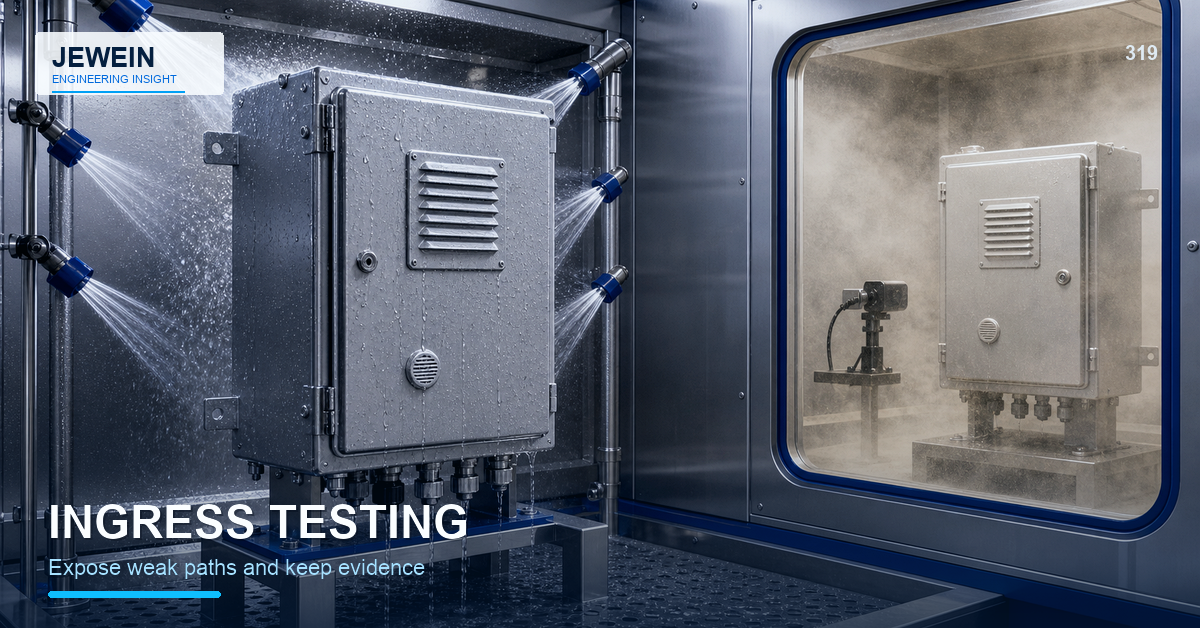
Use production finish, doors, gaskets, vents, glands, drains, internal heat, and mounting orientation. Include wind or angled spray when the environment requires it.
The sheet metal enclosure ingress testing guide helps preserve weak-path evidence and inspect at the right time after exposure.
Review Snow, Ice, and Wall Runoff
Snow can block vents and later release concentrated meltwater. Ice can bridge drip edges or hold a door seal open. Water running down a building wall may enter behind mounting brackets even when the exposed front performs well. Include clearances, back-panel spacers, roof loading, freeze-thaw damage, and seasonal inspection in the outdoor plan. These paths are easy to miss in a short warm-weather spray test.
Jewein explains custom enclosure development and production coordination in its company overview. Final weather exposure, structural loads, electrical safety, and environmental qualification require qualified specialists.
To review outdoor sheet metal enclosure rain protection on a specific installation, contact Jewein with mounted photos, prevailing wind, nearby runoff and splash sources, roof and door details, vent and cable locations, drain paths, material, finish, and the latest exposure results.
Frequently Asked Questions
Why should an outdoor enclosure roof be sloped?
Slope helps shed water and reduce standing exposure, but seams, fasteners, overhangs, installation level, snow, and maintenance still matter.
What does a drip edge do?
It encourages water to detach from the panel edge instead of tracking underneath toward a door, vent, joint, or wall interface.
How can rain enter when an enclosure door opens?
Water can run from the roof or door face into the opening, so gutters, shields, hinge orientation, channels, and service procedures need review.
Why is wind-driven rain harder to control?
Wind changes droplet direction and pressure, pushing water upward, sideways, through louvers, and across gaps that resist vertical rainfall.
How should outdoor rain protection be tested?
Use representative mounting, orientation, doors, vents, glands, internal heat, wind or spray exposure, drainage, and inspection timing.