


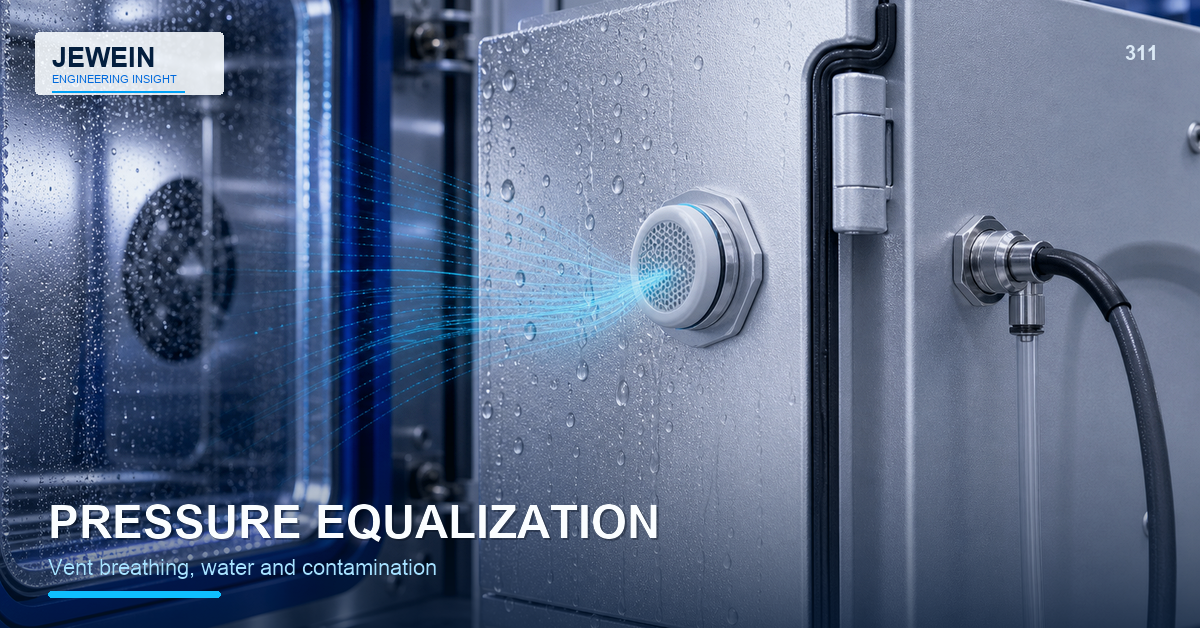
One field clue is a door that releases with a hiss after the cabinet has been in the sun. The same cabinet may pull inward during rapid cooling or an altitude change. Those reversals work the gasket, encourage air through unintended gaps, and tempt teams to drill a relief hole that creates a new exposure path.
Select an enclosure pressure equalization vent around the real temperature cycle, air volume, allowable response time, membrane behavior, contamination, mounting interface, and maintenance plan. The vent is one part of the enclosure boundary, not a guarantee by itself.
Map the Pressure Cycle
Identify internal heat sources, powered and unpowered states, sunlight, night cooling, washdown, transport altitude, rapid weather changes, and fan operation. Estimate which transitions create the largest pressure difference and how quickly they occur.
The sheet metal enclosure ventilation guide explains why airflow and environmental protection cannot be separated. A passive breathing vent handles a different problem from a cooling fan, even though both move air.
Decide What the Vent Must Block
Start with what is found at the installation. Roadside dust can cake on an upward-facing cap, wash water can sit around a recessed fitting, and oil aerosol can wet a membrane near machinery. Record the credible deposits and cleaning fluids, then test the vent after that exposure instead of relying only on a clean-air value.
Avoid vague requirements such as "waterproof vent." State the installed orientation, exposure direction, pressure cycle, temperature range, and service condition that the assembly must survive.
| Design input | Why it matters | Evidence direction |
|---|---|---|
| Enclosure volume | Changes air quantity and response | Pressure-cycle profile |
| Temperature rate | Drives fast expansion or contraction | Powered and unpowered tests |
| Membrane area | Influences airflow and contamination exposure | Supplier data plus assembly test |
| Mounting direction | Changes water and drainage behavior | Installed-orientation exposure |
| Dust loading | Can reduce breathing performance | Aged or contaminated verification |
Match Airflow to the Response Time
The required flow is not simply the largest available vent. High flow may increase contamination exchange, while low flow may leave the gasket carrying repeated pressure. Evaluate pressure response across the actual temperature ramp.
For an enclosure pressure equalization vent, include the restriction of protective covers, internal baffles, mounting thickness, and any clogged condition. The nominal component flow does not describe the full installed path.
Place the Vent Outside Direct Water Paths
Avoid locations that collect standing water, receive direct hose impact, sit beneath a roof runoff path, or become blocked by a wall, cable bundle, insulation, or internal component. Orientation can be as important as the component itself.
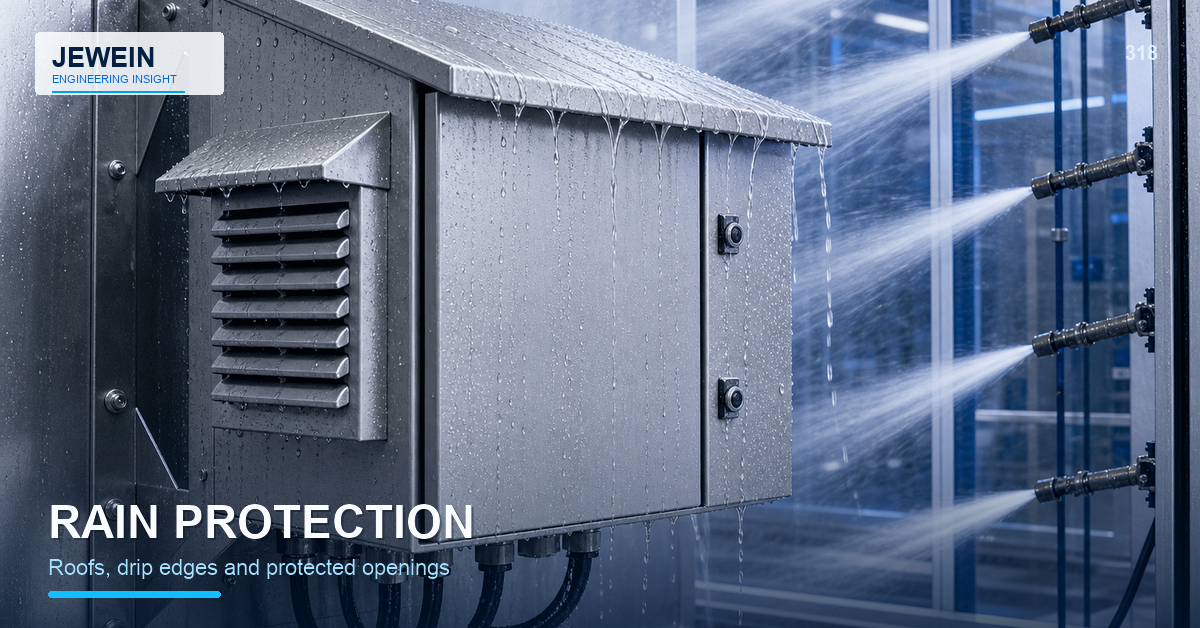
Provide external shedding and internal drainage where needed. The outdoor enclosure rain protection guide connects roof slope, drip edges, vents, doors, and wind-driven exposure.
Design the Mounting Interface
The panel must remain stiff enough for the vent gasket or sealing feature to seat. A thin wall can dish during tightening. Burrs, coating buildup, uneven powder, weld distortion, and hole-size variation can create local leakage.
Define hole geometry, thread or nut, torque method, gasket side, surface finish, and replacement parts. The sheet metal enclosure gasket guide provides a broader framework for compression, flange condition, door stiffness, and service.
Prevent Internal Obstruction
Keep the interior side away from insulation, wiring, labels, foam, filters, and condensate paths. A vent that is clear outside can be blocked inside after final assembly.
Use a guard only when it does not create another restrictive or water-holding cavity. Confirm the fully assembled condition, not an empty enclosure shell.
Account for Aging and Contamination
A new vent and a field-returned vent rarely tell the same story. Compare flow or pressure response after thermal cycling, outdoor exposure, cleaning, and representative deposits. Turn the result into a practical trigger, such as a damaged cap, persistent residue, slow pressure recovery, or a defined service interval.
If the vent cannot be cleaned safely, make replacement accessible without disturbing unrelated wiring or the main door gasket. Record component identity so substitutes are reviewed before use.
Test Pressure and Environmental Performance Together
A pressure-response test can show breathing performance, while water or dust exposure can show boundary resistance. Use representative production hardware, finish, torque, and orientation.
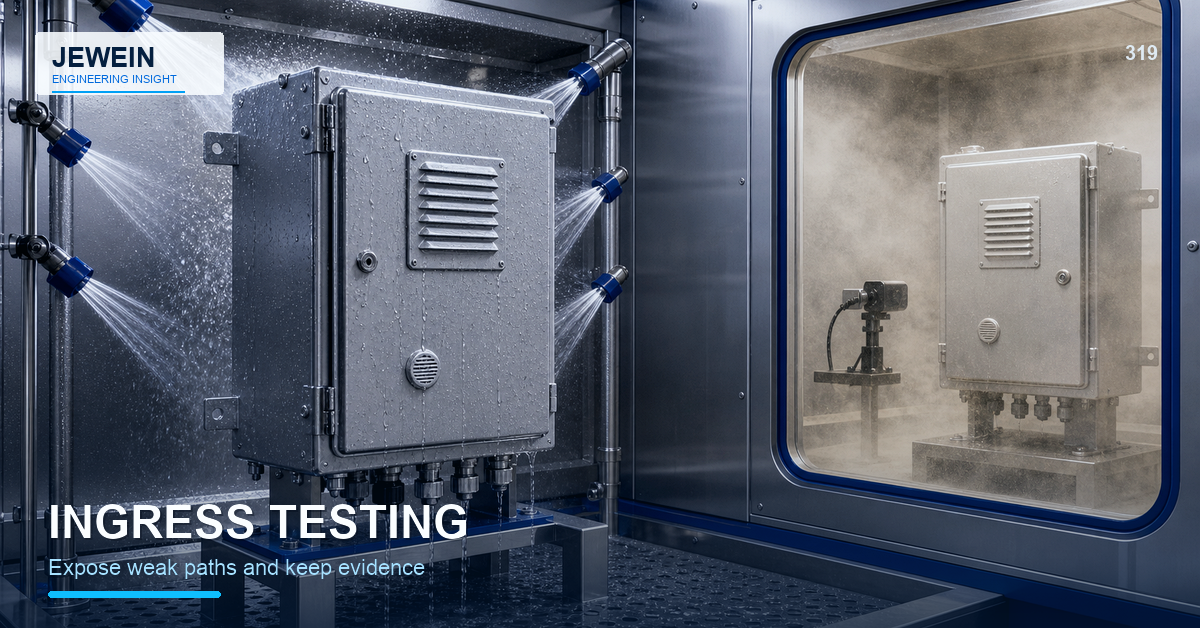
The sheet metal enclosure ingress testing guide explains how setup, weak paths, drainage, and inspection timing affect evidence. Preserve pressure data before disassembling a failed unit.
Review Condensation Risk
Pressure equalization can reduce stress on seals but also exchanges air with the environment. Under some cycles, moisture can enter and later condense on cold internal surfaces.
Use the sheet metal enclosure condensation guide to connect breathing, temperature, insulation, heaters, airflow, drainage, coatings, and monitoring.
Control Service Changes
Document component, mounting torque, gasket, orientation, inspection, and post-service checks. A technician should not replace a vent with a visually similar plug or reverse its orientation without review.
Jewein describes enclosure DFM and manufacturing-risk review in its company overview. Final environmental rating, vent selection, and qualification require qualified product and test specialists.
To review an enclosure pressure equalization vent against a real cabinet, contact Jewein with the enclosure volume, mounting photos, temperature log, internal heat, exposure direction, required protection, and any pressure or ingress results already available.
Frequently Asked Questions
Why does pressure change inside a sealed enclosure?
Temperature, altitude, weather, internal heat, fans, and rapid environmental changes can expand or contract the trapped air.
Can a pressure equalization vent stop all water?
A suitable vent can resist specified exposure, but performance still depends on membrane, mounting, orientation, drainage, damage, contamination, and test conditions.
Where should an enclosure vent be installed?
Choose a location that supports pressure exchange while avoiding direct spray, standing water, blocked airflow, cable strain, and service damage.
What happens if the vent becomes clogged?
Pressure cycling can increase seal stress, airflow can fall, and the enclosure may draw moisture through unintended gaps.
How should a pressure vent be verified?
Verify mounting, torque, gasket contact, airflow or pressure response, environmental resistance, drainage, and performance after contamination or aging when required.