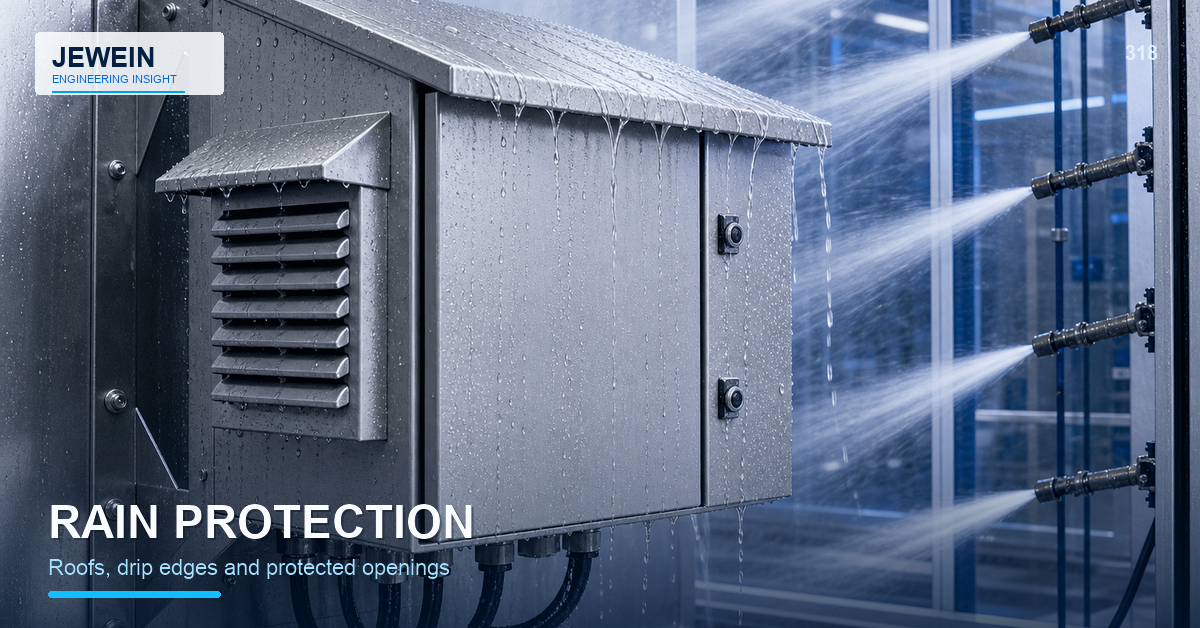



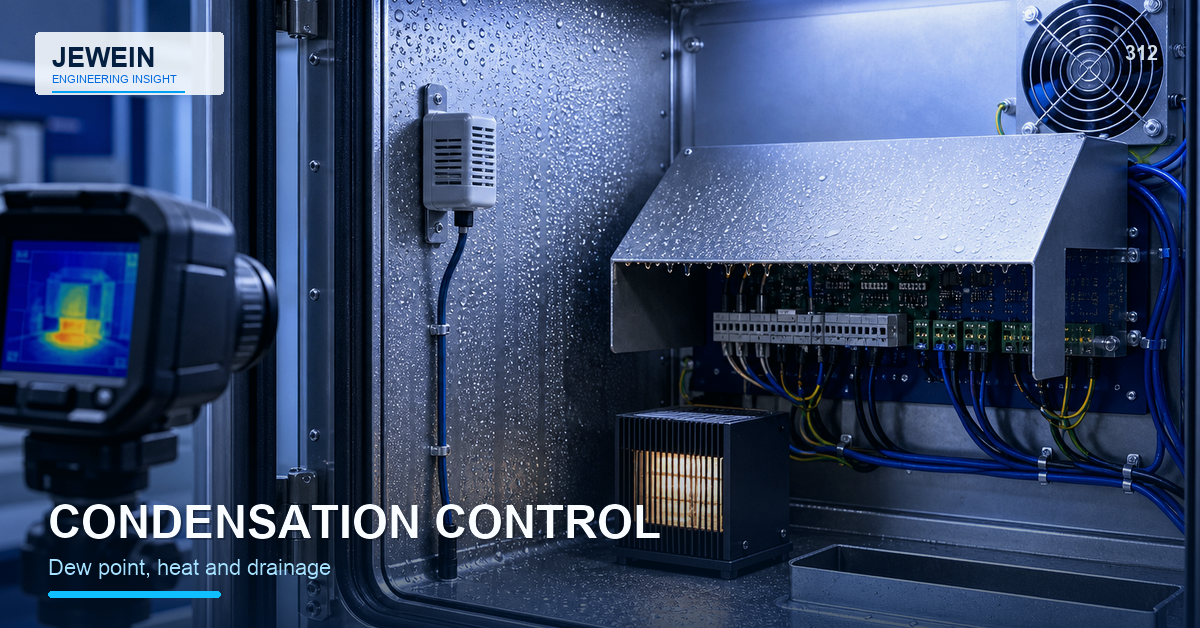
A wet streak below a terminal does not prove that rain crossed the door seal. On one cycle the cabinet may close with humid shop air inside; hours later, a cold roof or mounting stud becomes the first surface to collect droplets. By the time the enclosure is opened, the water may be gone and only a stain, fault record, or corroded fastener remains.
Control sheet metal enclosure condensation by mapping moisture sources, cold surfaces, temperature rate, internal heat, powered states, airflow, drainage, coatings, and service. The goal is to prevent water from forming where possible and manage it safely when prevention is incomplete.
Build the Temperature and Humidity Cycle
Review daytime heating, night cooling, equipment startup, shutdown, cold transport, warm installation, washdown, seasonal humidity, and maintenance opening. A single steady-state temperature does not reveal condensation risk.
The enclosure pressure equalization vent guide explains how breathing can exchange moisture while reducing pressure stress. Include vent response and air exchange in the moisture model.
Find the Coldest Surfaces
Search for local cold spots rather than trusting the average air reading. A roof corner exposed to night sky, a stud tied to an outside bracket, or a metal cable fitting can cool first. Logging beside those details often explains droplets that a sensor near the warm controller never records.
Use representative sensors, thermal imaging, or temperature logging where needed. Place evidence at credible cold locations rather than only near a warm controller.
| Risk source | What to inspect | Control direction |
|---|---|---|
| Night cooling | Roof and outer walls | Insulation, heat, circulation |
| Thermal bridge | Mounts, studs, hardware | Isolate or manage local surface |
| Door opening | Humid air exchange | Service procedure and recovery |
| Warm electronics | Air stratification | Circulation and sensor placement |
| Trapped water | Bottom seams and channels | Drainage and corrosion protection |
Reduce Moisture Entry
Control door seals, cable glands, vents, unused openings, and service covers. Avoid storing wet components or cleaning residue inside before closure. Assembly humidity can become the initial moisture load.
For sheet metal enclosure condensation, document whether units are closed in a controlled area, packaged with desiccant, purged, or exposed to outdoor air. These conditions affect the first cycles in service.
Manage Surface Temperature
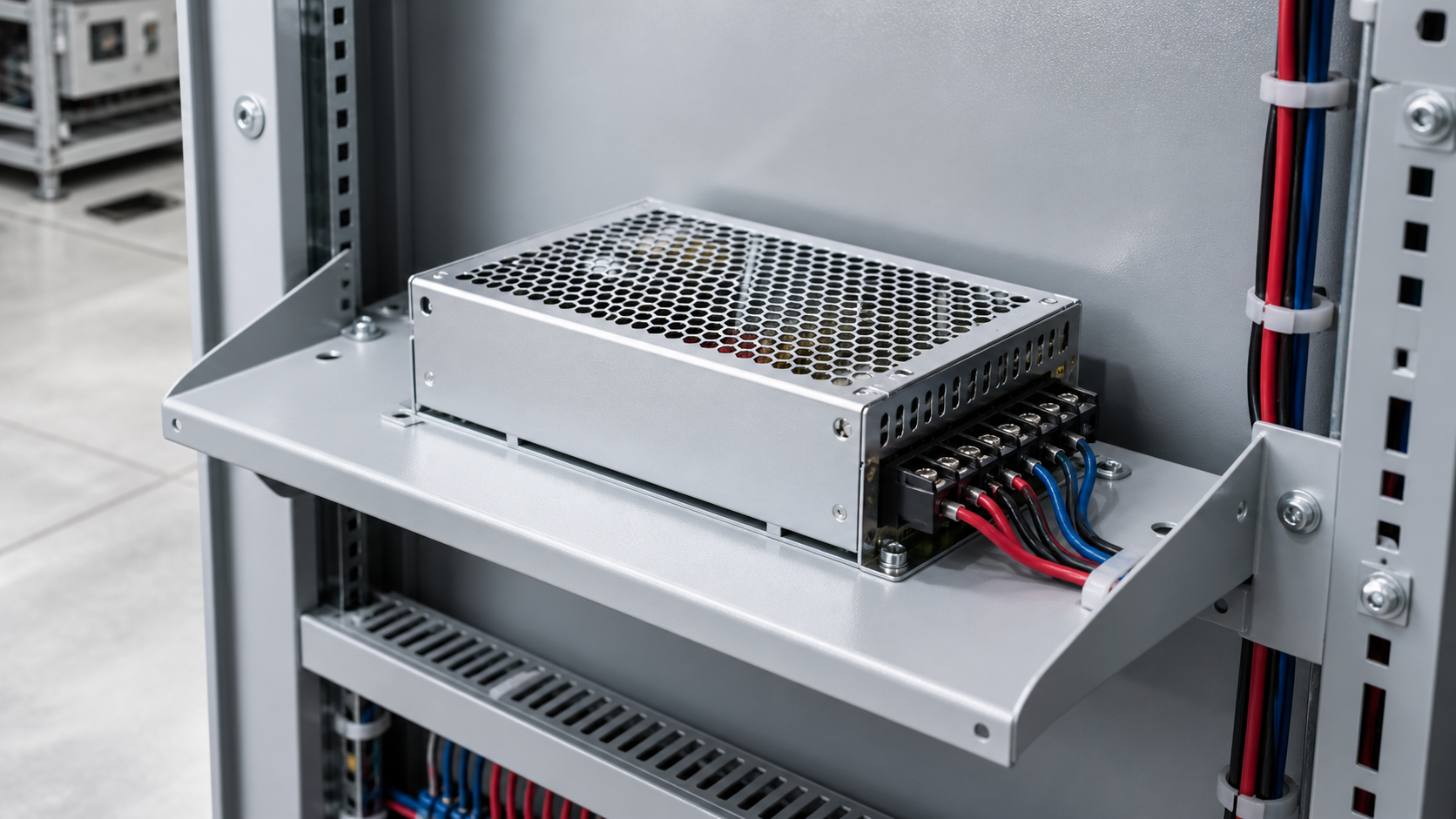
A heater is useful only when its heat reaches the vulnerable surface at the vulnerable time. Check the dead-air pocket behind the mounting plate, the shutdown period, thermostat position, restart delay, and the outcome of a failed fan. Insulation may slow the roof's cooling, yet a poorly terminated blanket can hide water or close a drain route.
The sheet metal enclosure ventilation guide provides context for airflow, filters, contamination, and heat load. Natural or forced circulation should reach cold pockets rather than only move warm air near the fan.
Design a Safe Water Path
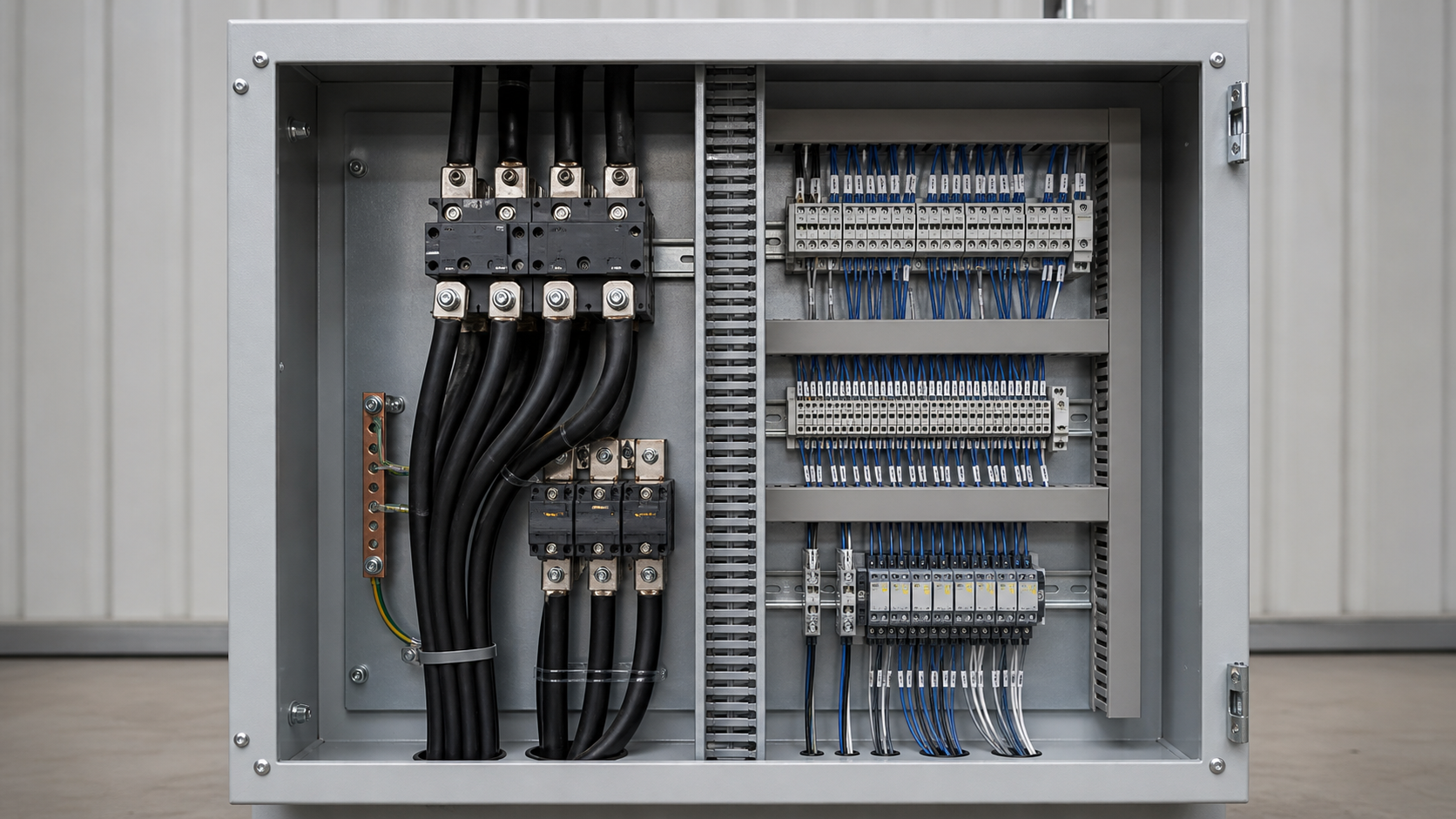
If condensation can occur, prevent droplets from falling onto energized or corrosion-sensitive components. Use shields, spacing, drip paths, channels, and drains as appropriate.
The sheet metal enclosure drain hole guide explains how installed low points, slope, blockage, screens, splash, and cleaning influence drainage.
Select Coatings for the Hidden Interior
Interior surfaces may need corrosion protection even when they are not cosmetic. Masking, grounding, welds, cut edges, hardware, and repair areas can interrupt the finish.
The powder coating adhesion guide helps trace a damaged interior finish back to preparation, pretreatment, cure, edge coverage, or handling. Treat sound coating as corrosion delay, not as permission to let water collect beside terminals or masked bonding areas.
Use Desiccant With a Capacity Plan
Desiccant can manage a defined moisture load in a controlled volume, but it has finite capacity. Define quantity, packaging barrier, installation timing, replacement interval, indicator use, and service ownership.
Do not rely on an untracked packet for an enclosure that repeatedly exchanges humid air. Check whether field technicians can identify and replace the correct material.
Monitor the Right Condition
Humidity, temperature, dew-point margin, or liquid-water sensing may be useful depending on risk. Sensor placement, accuracy, response, contamination, and alarm ownership matter.
Logging across powered and unpowered cycles is more useful than one reading taken after the enclosure has warmed. Preserve time correlation with internal heat and weather conditions.
Test Representative Cycles
Use real enclosure orientation, vents, gaskets, cable entries, internal heat, door state, and drainage. Inspect during and immediately after the risky transition because water can evaporate before later teardown.
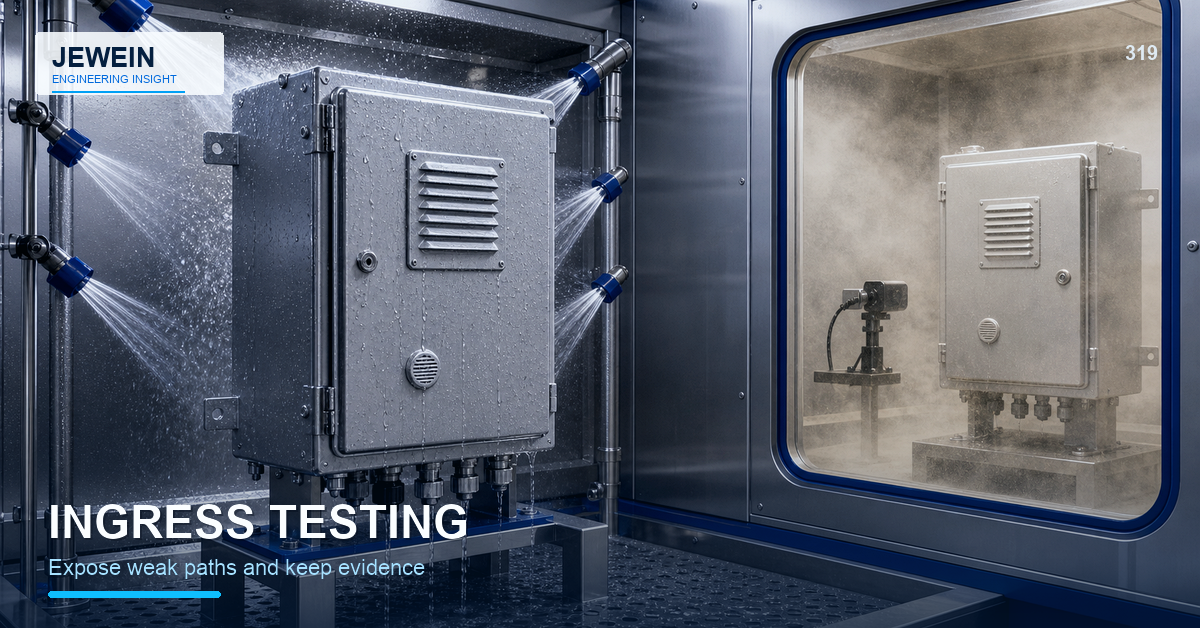
The sheet metal enclosure ingress testing guide helps distinguish moisture generated internally from water entering through a weak boundary path.
Plan for Power Loss and Recovery
A heater or fan may control moisture while power is available, then leave the enclosure vulnerable during shutdown. Review how quickly internal surfaces cool, whether warm humid air is pulled in, and how the system recovers after power returns. Include alarm history, battery-backed functions, restart delay, and the possibility that technicians open the door during a fault. The recovery period can carry more risk than steady operation.
Jewein describes enclosure manufacturing and risk review in its company overview. Final dew-point analysis, electrical safety, heater sizing, and environmental qualification require qualified product specialists.
For a sheet metal enclosure condensation review tied to the installed unit, contact Jewein with weather and shutdown logs, internal heat, vent and seal details, mounting orientation, cold-spot photos, component layout, corrosion evidence, and sensor locations.
Frequently Asked Questions
Why can condensation form inside a sealed enclosure?
Moist air can enter during assembly or breathing, then condense when an internal surface falls below the local dew point.
Do enclosure heaters prevent condensation?
They can help maintain temperature or circulation, but sizing, control, power availability, placement, safety, and operating cycles must be validated.
Is desiccant enough for long-term control?
Desiccant has finite capacity and needs controlled quantity, packaging, replacement, and exposure assumptions; it is not a universal permanent solution.
Where should condensation sensors be placed?
Place sensors where moisture risk is credible, including cold surfaces and low-airflow zones, while allowing service and protecting them from false exposure.
How should condensation control be tested?
Use representative temperature and humidity cycles, powered and unpowered states, orientation, internal heat, inspection timing, and evidence of water paths.