


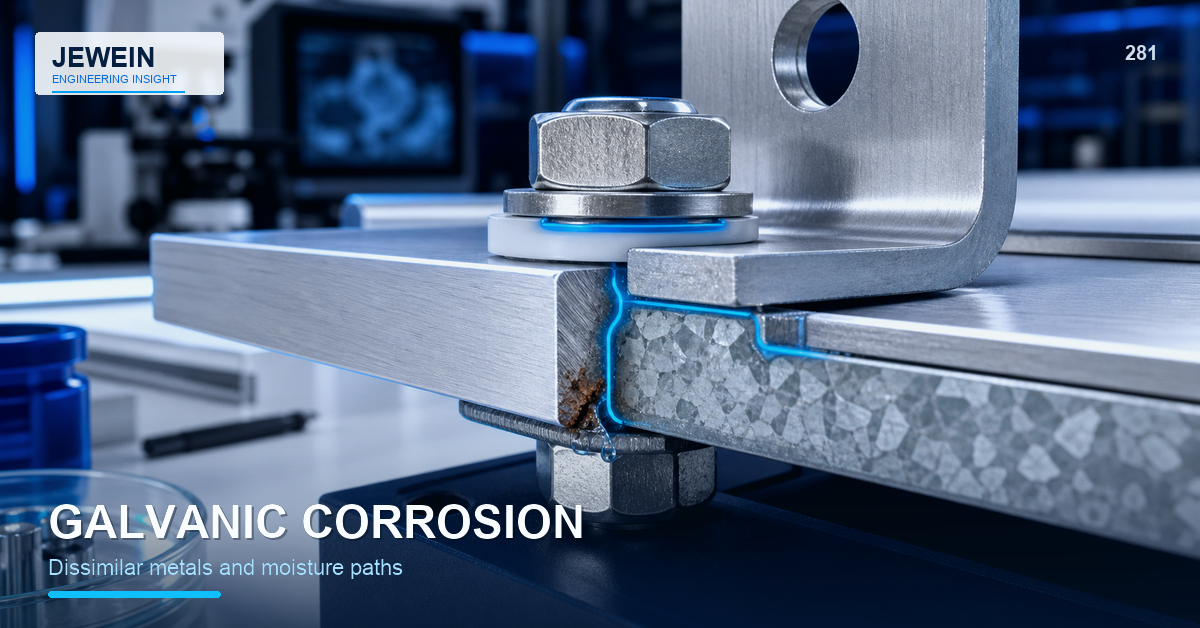
A joint can look perfect at final inspection and still come back months later with attack around one washer. The usual surprise is that the drawing named the panel material but not the plating on the screw, the bare edge inside the hole, or the water held beneath the hardware after cleaning.
To control galvanic corrosion in sheet metal, reconstruct the whole circuit: which metals actually touch, where liquid can bridge them, how large each exposed area is, and what happens when paint or isolation is damaged during assembly.
Start With a Real Material Map
Do not stop at labels such as "steel enclosure" or "aluminum bracket." Record the substrate and finish for panels, fasteners, washers, inserts, hinges, springs, terminals, cable glands, and repair areas. A zinc-plated screw, stainless washer, bare cut edge, and painted carbon-steel panel create several interfaces in one small joint.
The galvanized steel versus stainless steel guide explains why environment and finish route matter alongside the base grade. Apply the same discipline to purchased hardware.
Draw the Three Parts of the Circuit
A useful review asks three different questions. Keeping them separate makes it easier to see which control is doing the real work.
| Circuit element | Questions to answer | Common blind spot |
|---|---|---|
| Electrical path | Where do metals touch through hardware, burrs, coatings, or bonding straps? | Paint is assumed to isolate every edge |
| Electrolyte path | How can moisture enter, remain, or move across the joint? | Condensation is ignored because rain is excluded |
| Driving pair | Which exposed metals form the active couple? | Plating and repair materials are omitted |
Breaking one path may be enough. The difficult part is proving that the break remains intact after torque, vibration, cleaning, service removal, and a small amount of ordinary damage.
Check Exposed Area Ratio
The relative exposed areas can matter as much as the metal pair. A small anodic area connected to a large cathodic area may experience concentrated attack. One example is a small damaged patch of a less noble metal connected to a much larger intact stainless surface.
Review area after punching, deburring, forming, welding, grinding, coating, and fastener installation. The designed surface area is not always the exposed electrochemical area after production.
Find Where Water Actually Stays
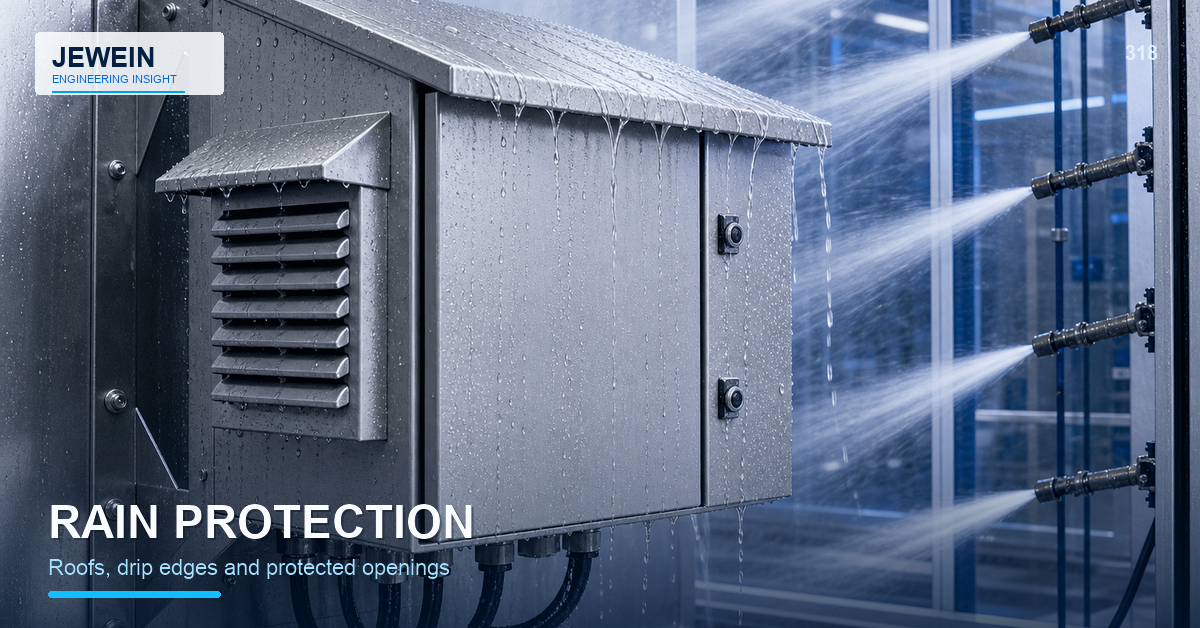
Water rarely spreads evenly. It collects under washers, behind overlapping flanges, inside hems, around gasket discontinuities, and at the low point of an enclosure. Fine dust or process residue can retain moisture long after the visible surface dries.
Use installation orientation, not only the CAD default. Include drain direction, cable entry, door opening, washdown, shipping condensation, and service access. The enclosure gasket design guide shows how sealing and drainage must be reviewed together.
Select Isolation That Survives Assembly
Isolation can come from a washer, sleeve, coating, sealant, plated fastener, relocated joint, or better drainage. None is self-proving. On one assembly, the useful control may be a shoulder sleeve that prevents the screw shank from touching the hole wall. On another, the same sleeve is sliced by a punching burr during installation.
Trial the real stack with production torque and access. Open several joints afterward. Look for crushed barriers, coating rings, displaced sealant, and metal-to-metal contact that was invisible from the outside.
For galvanic corrosion in sheet metal, verify that isolation does not conflict with structural load, grounding, heat transfer, or service removal. The grounding and bonding guide is particularly relevant when an electrical path is intentional.
Treat Cut Edges and Repairs as New Interfaces
Laser-cut holes, punched slots, trimmed edges, weld cleanup, and field drilling may expose substrate beside a more noble coating or fastener. A small scratch at a wet joint can become more important than a large undamaged painted face.
Define edge protection and repair limits before production. The sheet metal coating repair guide explains how preparation, compatible material, cure, and reinspection should be tied to the damaged zone.
Build an Inspection Around the Failure Path
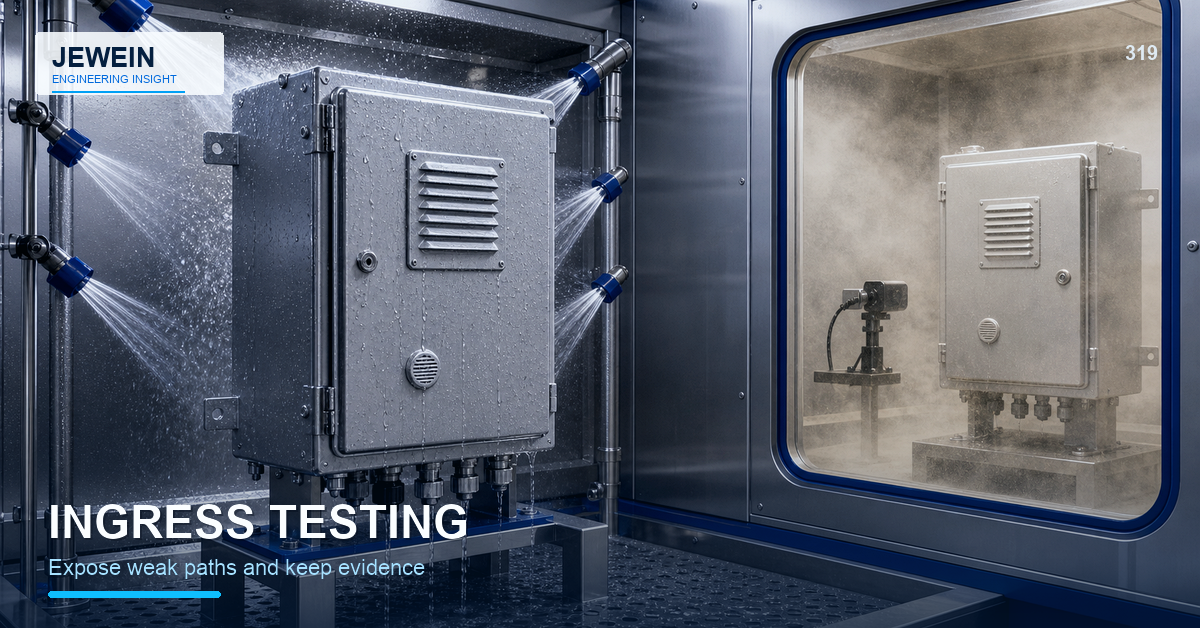
Inspection should follow the failure route. First confirm hardware and finish identity. Then inspect the barrier after installation, not only before it. Check whether burrs cut sleeves, whether torque breaks the coating, and whether sealant has a continuous transition. Finally, pour or introduce water in the installed orientation and confirm that drains remain open.
For serviceable equipment, repeat the check after one realistic removal and replacement cycle. Accelerated corrosion tests may support qualification, but they do not replace a review of wetting, chemistry, temperature, and maintenance in the real installation.
Release a Service-Readable Interface Record
The drawing should identify metal and finish at each critical interface, the isolation stack, masked or bare zones, sealant, assembly order, inspection, repair method, and approved substitutions. Service instructions matter when a technician can replace one small washer or screw and unknowingly recreate the electrical path.
Jewein describes drawing review, feasibility work, and manufacturing-risk control in its company overview. Final material compatibility and corrosion acceptance require qualified engineering for the actual environment.
For a focused galvanic corrosion in sheet metal review, contact Jewein with the material stack, finishes, hardware list, installation orientation, exposure conditions, drain paths, service plan, and photos of any existing attack.
Frequently Asked Questions
What creates a galvanic corrosion cell?
Dissimilar conductive materials, an electrical connection, and an electrolyte are all needed. Removing or controlling one part of that circuit can reduce risk.
Can paint isolate two different metals?
It can help, but holes, cut edges, threads, scratches, clamp damage, and field repairs may reconnect the metals or expose substrate to moisture.
Why does metal area ratio matter?
A small active area connected to a large more-noble area can experience concentrated corrosion, so the exposed area after fabrication and damage should be reviewed.
Are stainless fasteners always safe in aluminum panels?
Not automatically. Environment, exposed area, isolation, coating, drainage, clamp stack, service access, and structural requirements determine the suitable detail.
What should be checked during maintenance?
Look for coating damage, missing barriers, substituted hardware, trapped moisture, blocked drains, residue, loosened joints, and early attack near contact points.