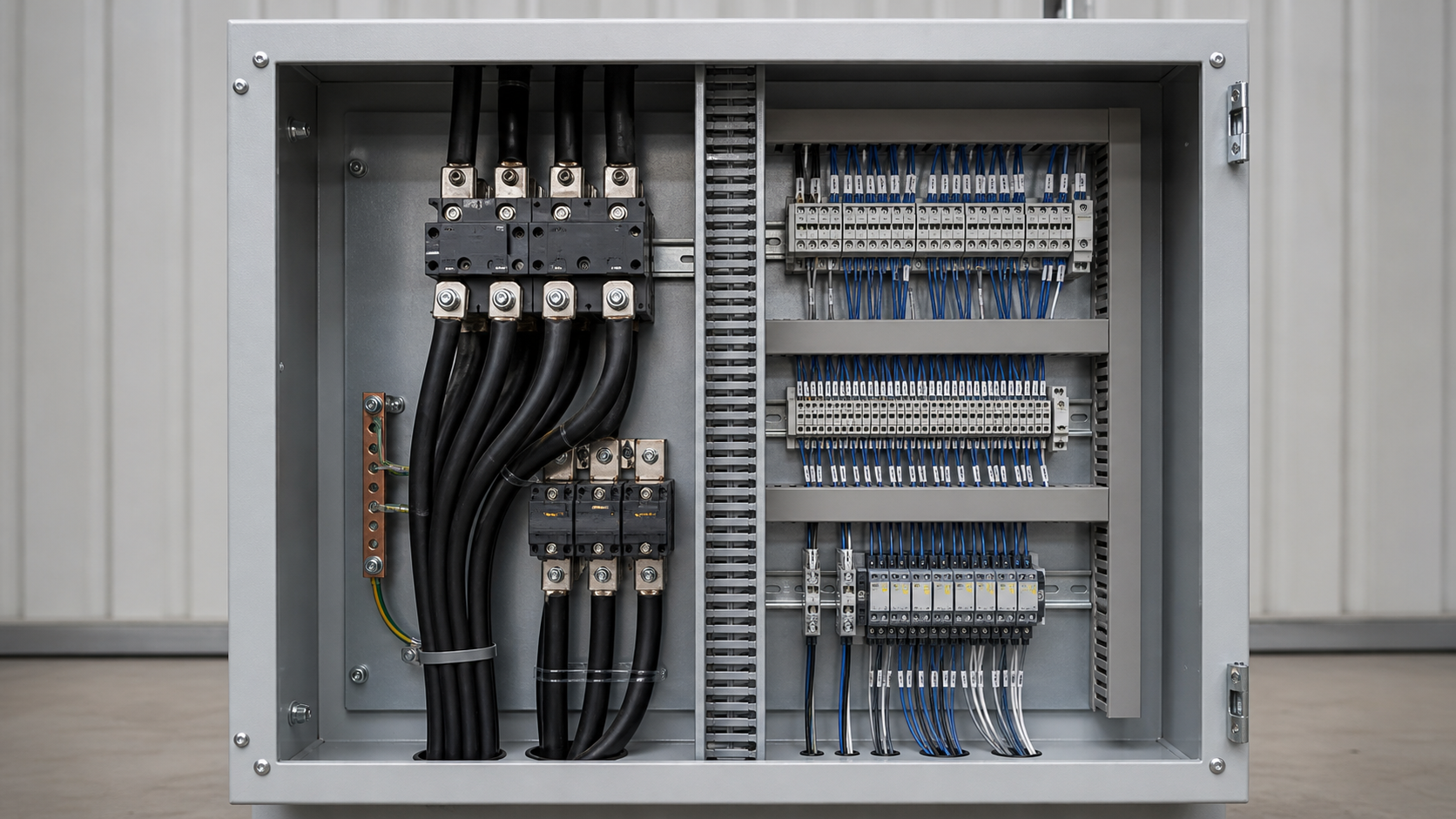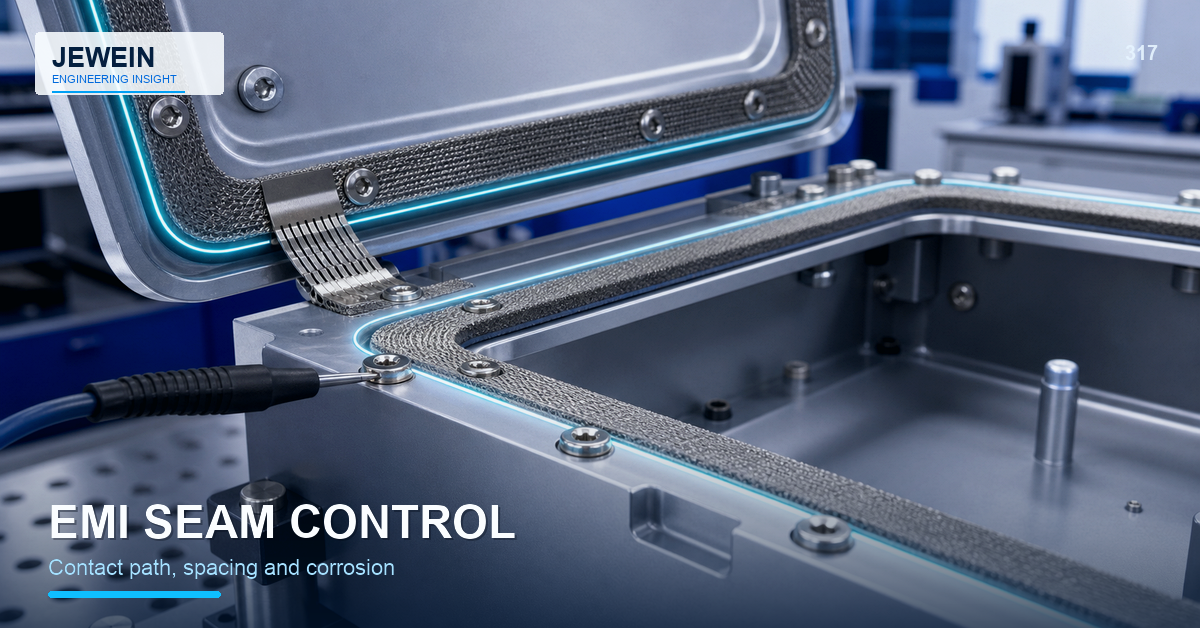



The enclosure wall can be well sealed while the cable entry remains the weakest boundary. A gland may be the wrong size for the actual jacket, several cables may be forced through one opening, or a thin removable plate may dish during tightening. Service changes then add strain and leave a path for water, dust, or electromagnetic leakage.
Plan sheet metal enclosure cable entry sealing around cable range, entry hardware, plate stiffness, hole finish, bend radius, strain relief, grounding, drainage, installation torque, and future service. The seal must work with the cable that is actually installed.
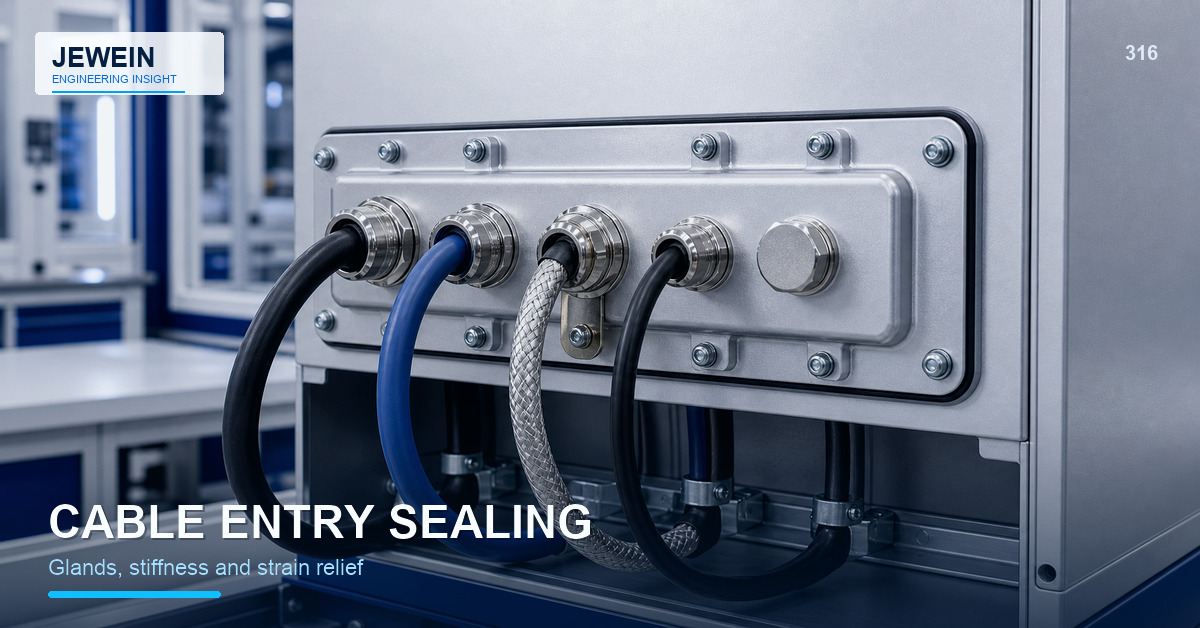
Define Every Cable and Installation State
List cable outer diameter, jacket material, count, shielding, connector size, minimum bend, movement, pull, temperature, chemical exposure, and replacement route. Include temporary commissioning cables and unused entries.
The custom sheet metal enclosure guide provides broader context for internal layout, hardware, service access, finish, and delivery risk.
Match Hardware to the Cable Range
Use the specified sealing range, not the nominal cable name. A jacket near the limit can behave differently after temperature cycling, aging, or bending.
Avoid improvised tape, oversized bushings, or multiple loose cables through a single-cable gland. Multi-cable systems need inserts or modules designed and validated for the exact combination.
| Entry decision | Failure if wrong | Evidence direction |
|---|---|---|
| Cable diameter | Seal never reaches controlled contact | Cable and gland range record |
| Hole or thread | Gland tilts or loosens | Finished-hole inspection |
| Panel stiffness | Wall dishes under torque | Torque and flatness check |
| Bend radius | Cable loads the seal sideways | Installed routing review |
| Strain relief | Pull transfers into termination | Cable-load verification |
Stiffen the Entry Plate
Thin sheet can rotate, oil-can, or bend during gland tightening. Use a flange, doubler, removable plate, formed boss, backing nut, or another supported geometry where needed.
For sheet metal enclosure cable entry sealing, inspect the fully torqued assembly for panel dish, gasket extrusion, thread engagement, and cable alignment. A loose sample on a bench does not reproduce the installed load.
The sheet metal hole design guide helps connect hole size, edge distance, burr, tooling, and downstream hardware fit.
Control the Sealing Surface
Define which side carries the gasket, whether coating is present, and how burrs or weld distortion are handled. Powder buildup and masking edges can create an uneven land.
The sheet metal finish callout guide provides a framework for process, color, texture, coverage, masking, inspection, packaging, and revision ownership.
Manage Cable Bend and Water Tracking
Water can follow a cable toward the gland. Use routing, drip loops, downward entry, shields, or protected locations where appropriate. Do not let the cable pull upward on a seal intended for straight compression.
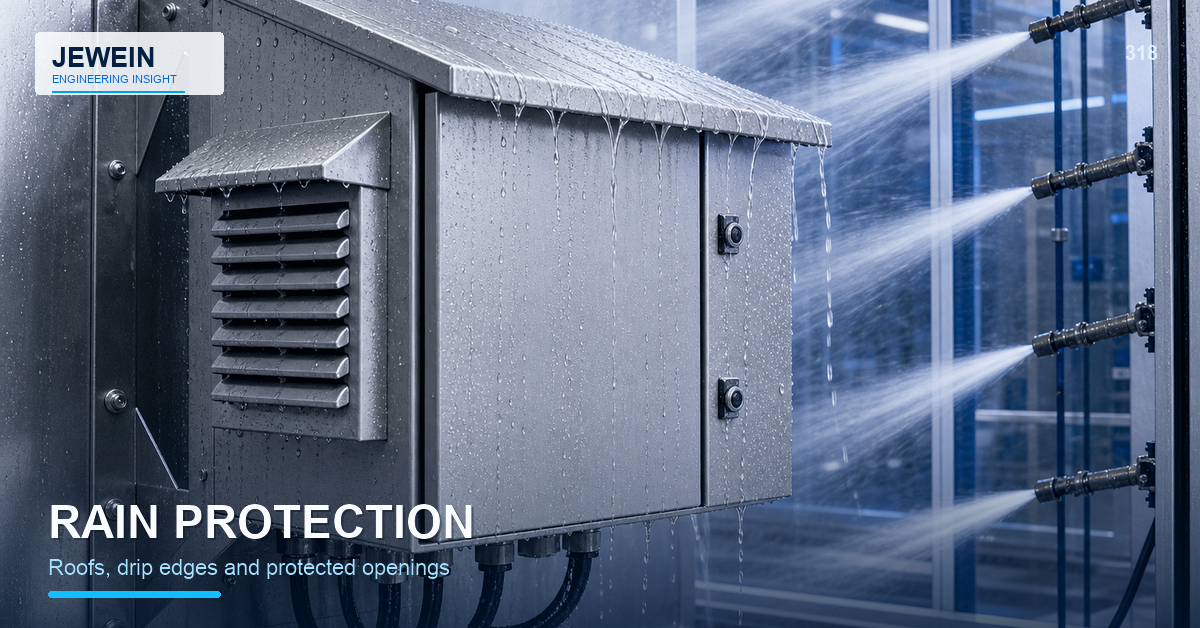
Coordinate the external path with the outdoor enclosure rain protection guide, including roof runoff, drip edges, doors, vents, splash, and wind.
Separate Sealing From Strain Relief
Some entry devices provide both functions; others do not. Define axial pull, side load, vibration, and service motion. Add internal or external clamps without creating a sharp bend or trapping water.
Test the cable after routing and termination. A seal can pass before the cable is connected and fail after installation forces move it off-axis.
Preserve Shielding and Grounding
Shielded cable entries may need a controlled conductive termination. Paint, anodizing, gasket material, hardware, and corrosion can interrupt the path.
The sheet metal grounding and bonding guide explains conductive paths, masking, hardware pressure, corrosion, testing, and service ownership.
Plan Unused and Future Entries
Use controlled plugs or blanking modules compatible with the entry system and environment. A loose plastic cap may not provide the same sealing, strength, or shielding.
Mark spare entries without damaging the finish. Define who may open them and what post-service test is required.
Make Service Repeatable
Provide wrench access, torque guidance, cable slack, replacement seals, and a clean sealing land. Prevent technicians from twisting the cable or using the gland as a handle.
Record hardware identity and installation orientation. Inspect after cable replacement, gland reuse, or plate removal.
When several cable variants share one enclosure, retain an approved entry matrix so production cannot select hardware by appearance alone.
Test the Completed Cable Assembly
Use production cables, glands, plates, torque, routing, strain relief, plugs, and finish. Include pull or movement before environmental exposure when service loads matter.
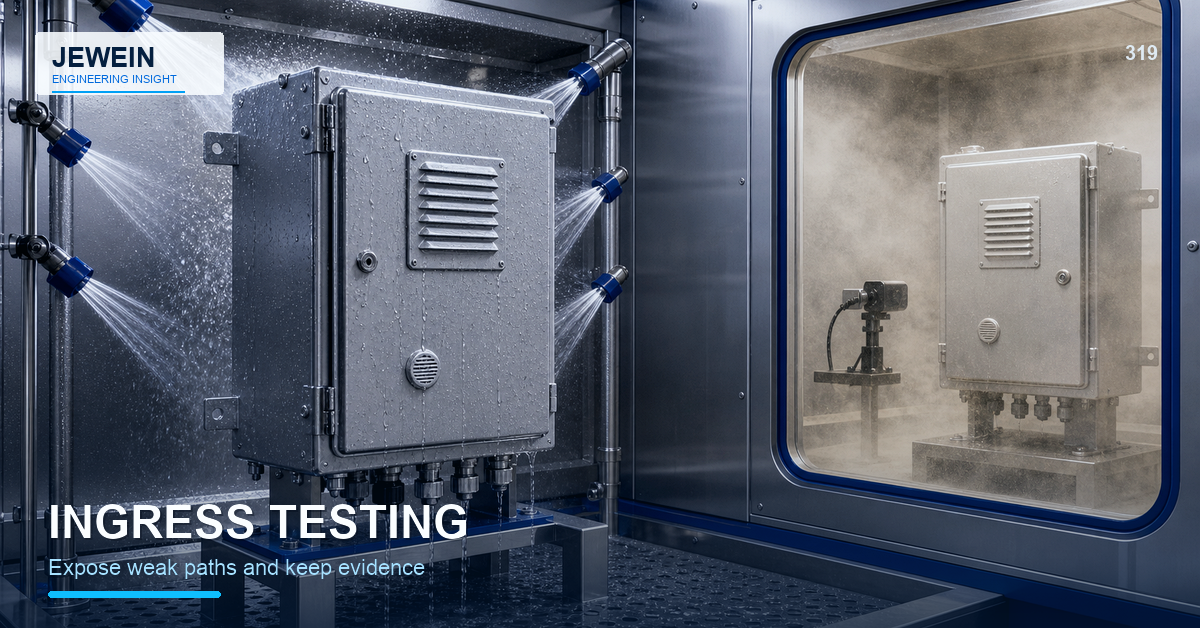
The sheet metal enclosure ingress testing guide helps preserve entry-path evidence and distinguish a gland failure from another boundary leak.
Jewein describes enclosure manufacturing and DFM coordination in its company overview. Final gland selection, electrical requirements, shielding, and qualification require qualified product specialists.
For a focused sheet metal enclosure cable entry sealing review, contact Jewein with cable diameters, jacket materials, entry hardware, panel thickness, finish, routing, strain loads, grounding needs, exposure, and test evidence.
Frequently Asked Questions
How is the correct cable gland size selected?
Match the actual cable diameter, jacket, quantity, environment, thread or hole, sealing range, strain, grounding, and required approvals.
Can several cables share one gland?
Only with a system designed and validated for that cable count and diameter combination; improvised grouping can leave leakage paths.
Why does cable-entry plate stiffness matter?
A thin plate can dish or rotate during gland tightening, reducing gasket contact and changing cable alignment or strain relief.
How is shielding handled at a cable entry?
Use a defined conductive path, compatible gland or termination, controlled finish, bonding surface, corrosion plan, and verification method.
How should sealed cable entries be serviced?
Define access, torque, replacement parts, cable slack, inspection, drainage, resealing, and post-service testing.