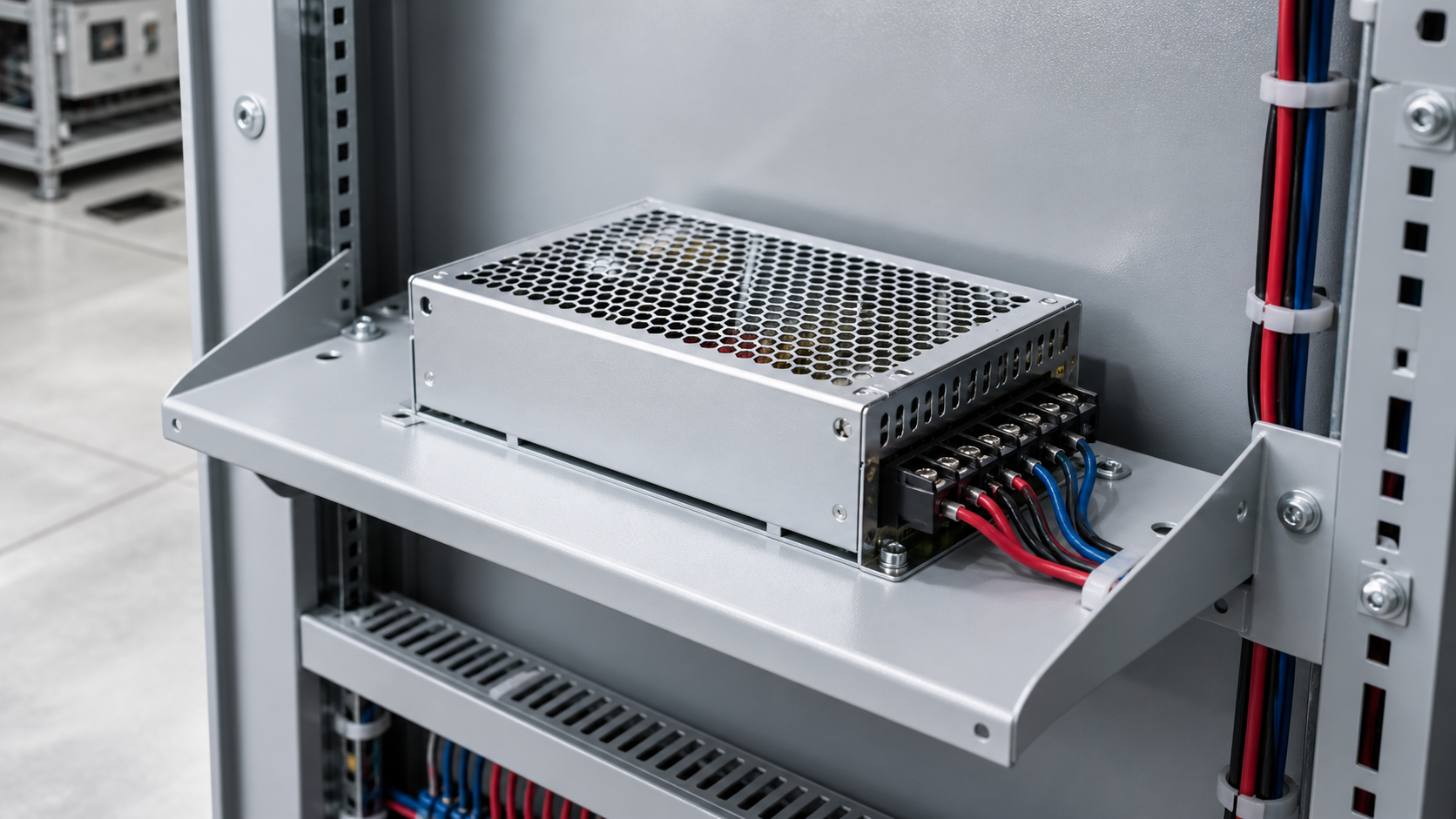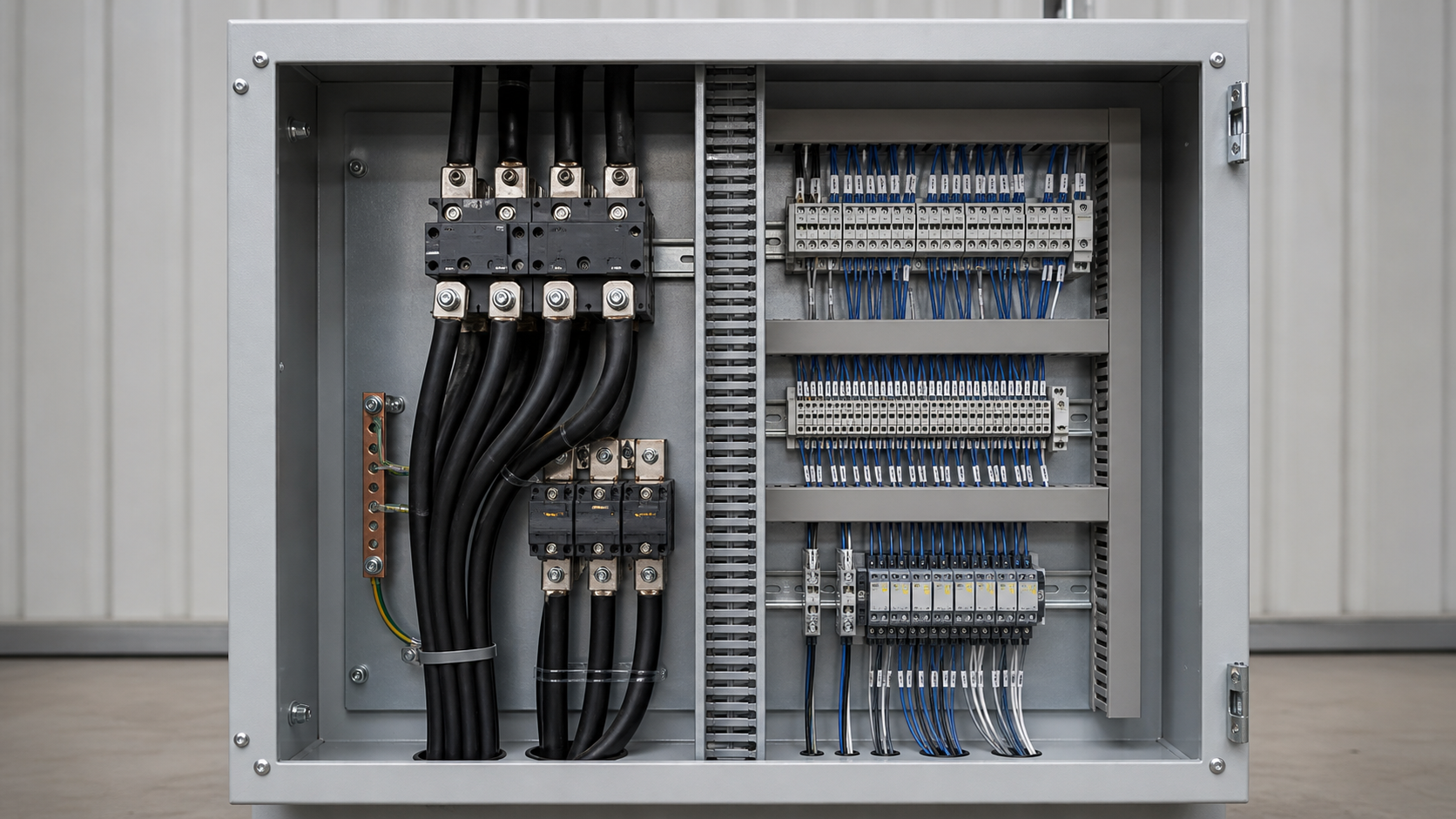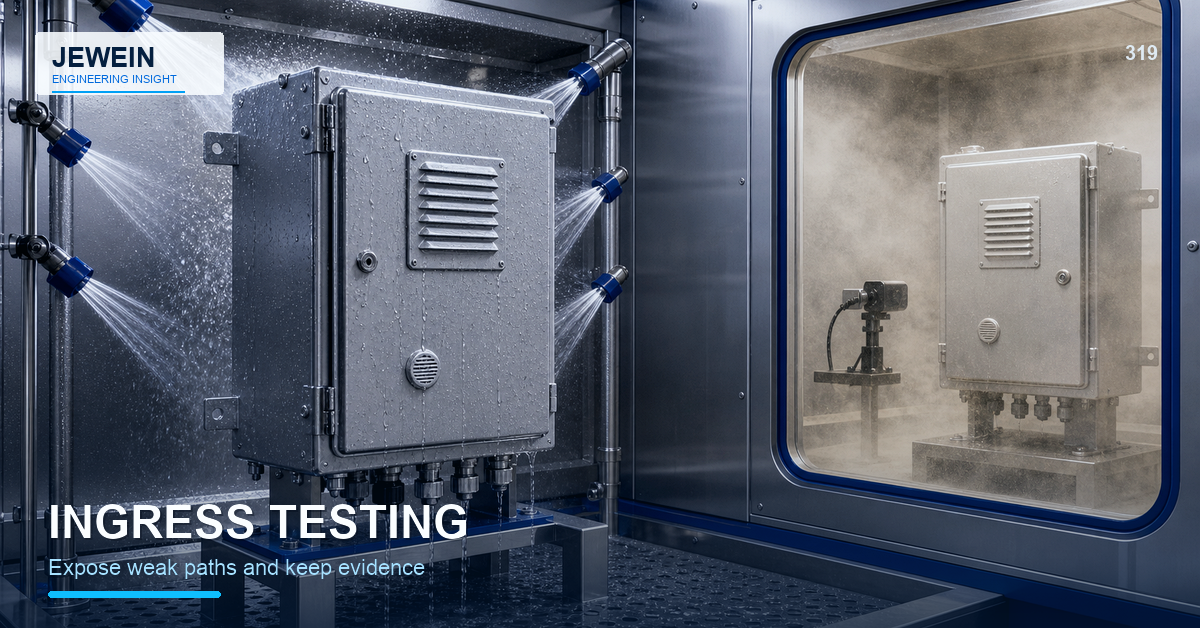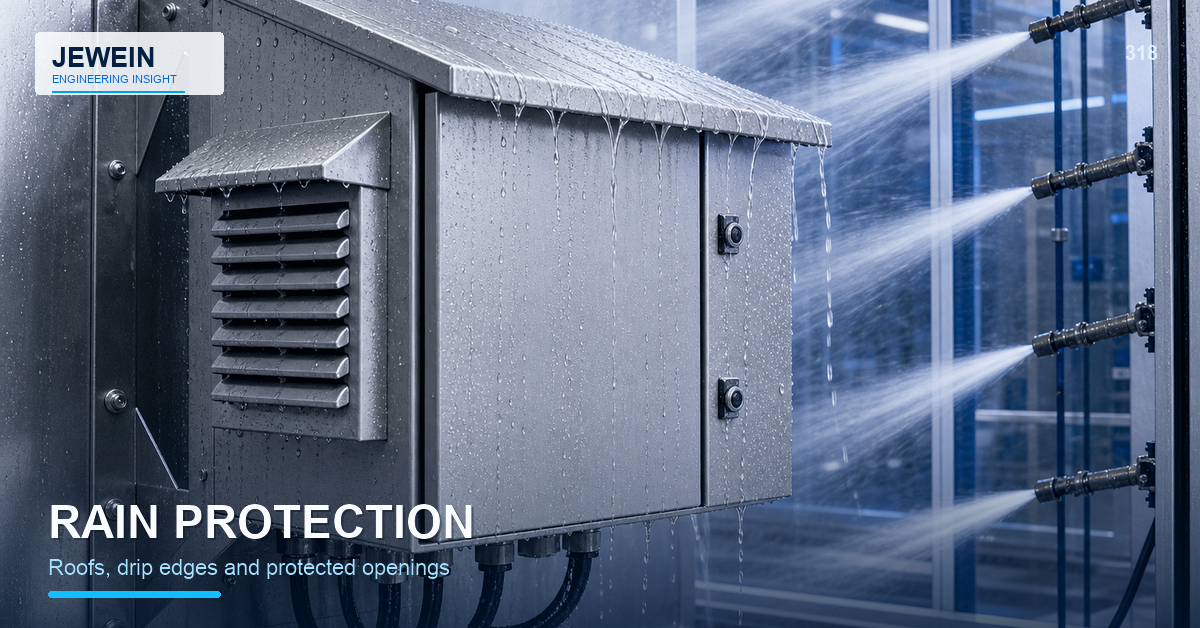



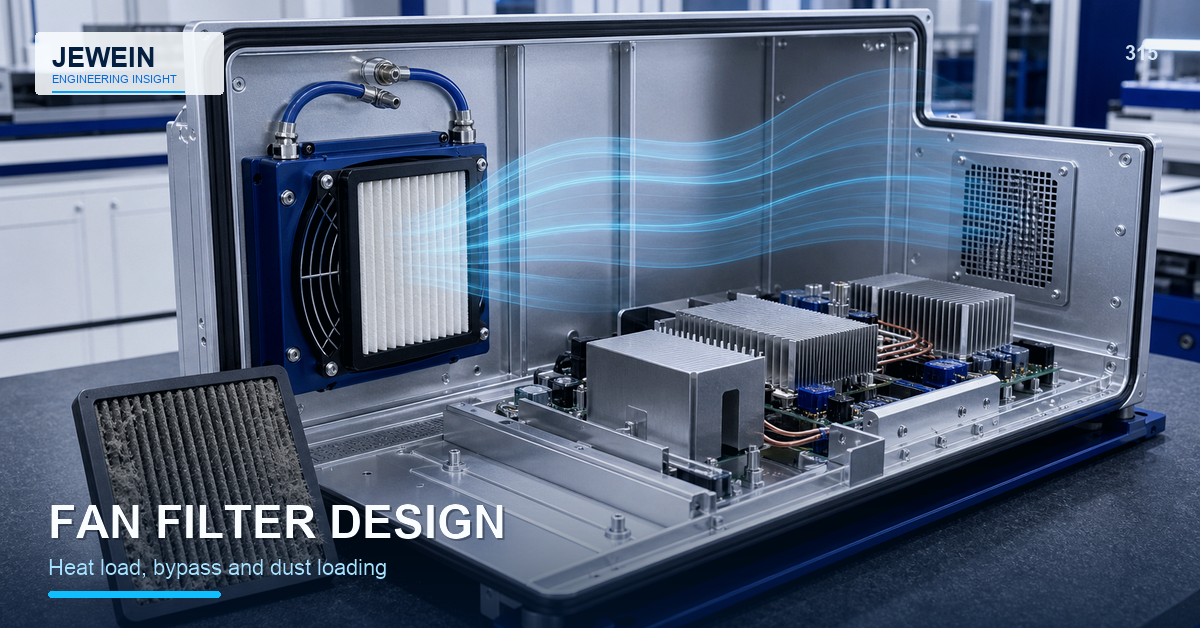
A fan can move its rated airflow in open air and deliver much less after a filter, louver, grille, duct, and crowded enclosure are added. As dust loads the filter, pressure resistance rises and air may start entering through door gaps or cable openings instead of the intended intake.
Build sheet metal enclosure fan filter design around heat load, allowable temperature, system resistance, fan behavior, filter loading, bypass sealing, panel stiffness, replacement access, monitoring, and maintenance. Cooling performance belongs to the complete installed path.
Convert Heat Load Into an Airflow Need
List component dissipation, duty cycle, ambient range, solar load, altitude, internal recirculation, and allowable temperatures. Separate normal operation from startup, blocked-filter, fan-failure, and unpowered conditions.
The sheet metal enclosure ventilation guide provides a wider framework for heat load, natural convection, forced airflow, contamination, noise, and service.
Use the Fan Curve With System Resistance
The operating point depends on the fan and the resistance of the whole path. Include filter media, grille, louver, screen, duct, bends, guards, and internal obstructions.
Do not select from free-air flow alone. Review performance at clean and loaded filter conditions, and confirm the available margin at the required ambient state.
| Path element | Common effect | Control evidence |
|---|---|---|
| Filter media | Resistance grows with dust | Clean and loaded airflow |
| Frame gasket | Bypass if not seated | Contact and installation check |
| Louver or grille | Reduces free area | Pressure-loss verification |
| Internal wiring | Blocks or redirects air | Production-layout test |
| Exhaust opening | Sets enclosure pressure | Intake-to-exhaust balance |
Prevent Filter Bypass
Air follows the easiest path. Gaps around the filter frame, warped panels, damaged clips, missing gaskets, or incorrect replacement media can allow unfiltered air into the enclosure.
For sheet metal enclosure fan filter design, define the sealing perimeter, compression, frame stiffness, fastener or clip engagement, and visual confirmation. Make incorrect filter orientation difficult.
The sheet metal enclosure gasket guide explains compression, flange geometry, corners, hardware, coating, service, and replacement.
Design the Panel Around Fan Loads
Fan torque, vibration, gasket compression, fastener load, and filter replacement can flex a thin wall. Add flanges, beads, brackets, or a removable fan plate where needed.
Control cutout size, hole position, flatness, burrs, coating, grounding, and hardware retention. A distorted panel can create both noise and bypass leakage.
Choose Intake and Exhaust Locations
Route cool air across the components that need it, then provide a low-resistance exit. Avoid short-circuiting intake directly to exhaust.
Consider hot-air rise, wall clearance, cable bundles, doors, shelves, and field mounting. Validate with the final internal layout rather than an empty shell.
Plan for Dust Loading
Define the expected contamination, filter class or media behavior, replacement interval, and allowable pressure rise. A calendar interval alone may not suit variable environments.
Use differential pressure, airflow, temperature, fan current, or another monitored signal when consequence justifies it. Set alarm ownership and response so the signal leads to action.
Make Replacement Safe and Repeatable
Technicians should reach the filter without disturbing energized equipment, door gaskets, or cable seals. Provide pull direction, finger clearance, retention, orientation, and disposal space.
The sheet metal enclosure cable entry sealing guide helps prevent service access from transferring strain into nearby glands and cables.
Manage Condensation and Pressure
Fans change internal pressure and can pull humid air through unintended gaps. Shutdown can remove heat and create a rapid cooling cycle.
The sheet metal enclosure condensation guide connects temperature cycling, airflow, insulation, heaters, drainage, coatings, sensors, and service.
Test Clean, Loaded, and Fault Conditions
Measure internal temperatures, airflow or pressure where useful, noise, vibration, bypass evidence, and filter seating. Include representative dust loading or pressure restriction rather than testing only a new filter.
Check fan reversal, blocked intake, open door, alarm behavior, and safe failure response when the product risk requires them.
Choose a Positive or Negative Pressure Strategy
An intake fan can create positive pressure that encourages leakage outward, while an exhaust fan can draw air inward through every weak gap. The preferred direction depends on contamination, heat sources, filter location, leakage paths, and service needs. Measure pressure at representative points and verify that a loaded filter does not reverse the intended balance. Door opening and a failed fan should be included in the operating logic.
Control Replacement Parts
Record fan, filter, gasket, frame, and fastener identity. A visually similar substitute can change airflow, filtration, noise, voltage, grounding, or environmental performance.
Jewein describes enclosure DFM and supplier-risk review in its company overview. Final thermal design, electrical safety, filter selection, and qualification require qualified product specialists.
For a focused sheet metal enclosure fan filter design review, contact Jewein with heat load, ambient range, target temperatures, enclosure layout, fan curve, filter data, dust exposure, service interval, and test evidence.
Frequently Asked Questions
How should an enclosure fan filter be sized?
Start with heat load and allowable temperature, then include filter resistance, system pressure loss, altitude, dust loading, fan curve, and margin.
What is filter bypass leakage?
It is air that travels around rather than through the filter because frames, gaskets, clips, panels, or replacement installation do not seal the path.
How does dust loading affect cooling?
Loaded media increases resistance and can reduce airflow, change pressure balance, raise internal temperature, and pull air through unintended gaps.
Where should replacement access be provided?
Place it where technicians can remove and reseat the filter safely without disconnecting unrelated equipment or damaging seals and cables.
Should a filtered enclosure monitor airflow?
Monitoring may be justified for critical equipment, but sensor type, thresholds, contamination, alarm ownership, and maintenance response need definition.